
Commercial vehicle comparison guide
Compact Cargo Vehicles vs Pickup Trucks
Different tools for different jobs. An objective comparison across urban deliveries, parking, running costs, payload and business suitability — to help operators choose the right platform for their specific operation.
5 dimensions, side by side
| Dimension | Compact cargo vehicle | Pickup truck | Verdict |
|---|---|---|---|
| Urban deliveries | Compact footprint; navigates narrow streets, pedestrianised zones, indoor logistics; LEZ unrestricted (electric) | Larger footprint; restricted from some urban zones; LEZ surcharge risk (diesel) | Compact wins Compact platforms have a structural access advantage in regulated urban environments. |
| Parking | Fits in standard and compact bays; accessible to loading areas inaccessible to pickups | Requires full-size bay; double-parking common in dense urban areas; higher parking cost | Compact wins Parking advantage most significant in high-density urban delivery environments. |
| Running costs | Lower fuel/energy cost (especially electric); lower insurance; lower road tax in many markets | Higher fuel cost; higher insurance premium; higher road tax in regulated markets | Compact wins Running cost gap widest for urban, short-distance operations. |
| Payload | 250–600 kg typical; 1–3 m³ cargo volume | 500–1,200 kg typical; open bed 1.5–2 m³; towing capacity additional | Pickup wins Pickup holds advantage for heavy loads, large items and towing requirements. |
| Business suitability | Urban delivery, campus logistics, food service, municipal operations, small retail | Construction, agriculture, heavy retail, rural delivery, towing, off-road access | Context-dependent Depends entirely on cargo type, route profile and operating environment. |
Urban delivery: where compact platforms hold the advantage
In urban delivery environments, the compact platform's advantages compound. Smaller footprint, lower emissions, better access and lower running costs combine to produce a meaningfully lower cost per delivery stop compared with a pickup truck on the same route.
Access
Compact vehicles navigate narrow streets, pedestrianised zones and indoor logistics environments inaccessible to full-size pickups.
Parking
Compact footprint reduces time per stop, eliminates parking fine risk and allows access to loading areas sized for smaller vehicles.
Running cost per stop
Lower energy cost, lower insurance and lower road tax combine to reduce cost per delivery stop on urban routes.
For rural delivery, construction sites, agricultural operations or routes requiring towing, the pickup truck retains clear practical advantages.
When the compact cargo vehicle is the better choice
Urban and peri-urban delivery
High-frequency stops in city environments where access, parking and running cost matter most
Low-emission zone operations
Electric compact platforms operate unrestricted in LEZ/ZEZ areas where diesel pickups face surcharges
Small retail and food service
Florists, pharmacies, restaurants, cafes and small retailers with moderate daily delivery volumes
Operating cost reduction
Operators prioritising lower per-km running costs, insurance and road tax over 3–5 year ownership
Campus and resort logistics
Enclosed environments requiring compact, low-noise, low-emission cargo capacity
When the pickup truck is the better choice
Heavy or bulky cargo
Loads above 600 kg, large items or cargo requiring open-bed access that compact platforms cannot accommodate
Rural or off-road operations
Routes requiring 4WD capability, high ground clearance or access to unpaved roads
Towing requirements
Operations requiring trailer towing capacity — equipment, boats, livestock or additional cargo
Construction and agriculture
Worksites requiring heavy-duty capability, tool storage and the versatility of a full-size utility vehicle
Where the running cost difference is made
Where compact platforms cost less to run
- Fuel/energy: Electric compact platforms cost 60–80% less per km than diesel pickups on urban routes
- Insurance: Compact commercial vehicles typically carry lower insurance premiums than full-size pickups
- Road tax: Many markets apply lower road tax to compact commercial vehicles than to full-size pickups
- Parking: Lower parking costs and fewer fines in urban environments
Where pickup trucks may be more cost-effective
- High-payload routes: When cargo volume per trip is high, fewer trips required reduces per-unit delivery cost
- Rural operations: No charging infrastructure requirement; established fuel network
- Multi-purpose use: Single vehicle serves delivery, towing and site work — reducing total fleet size
Practical example
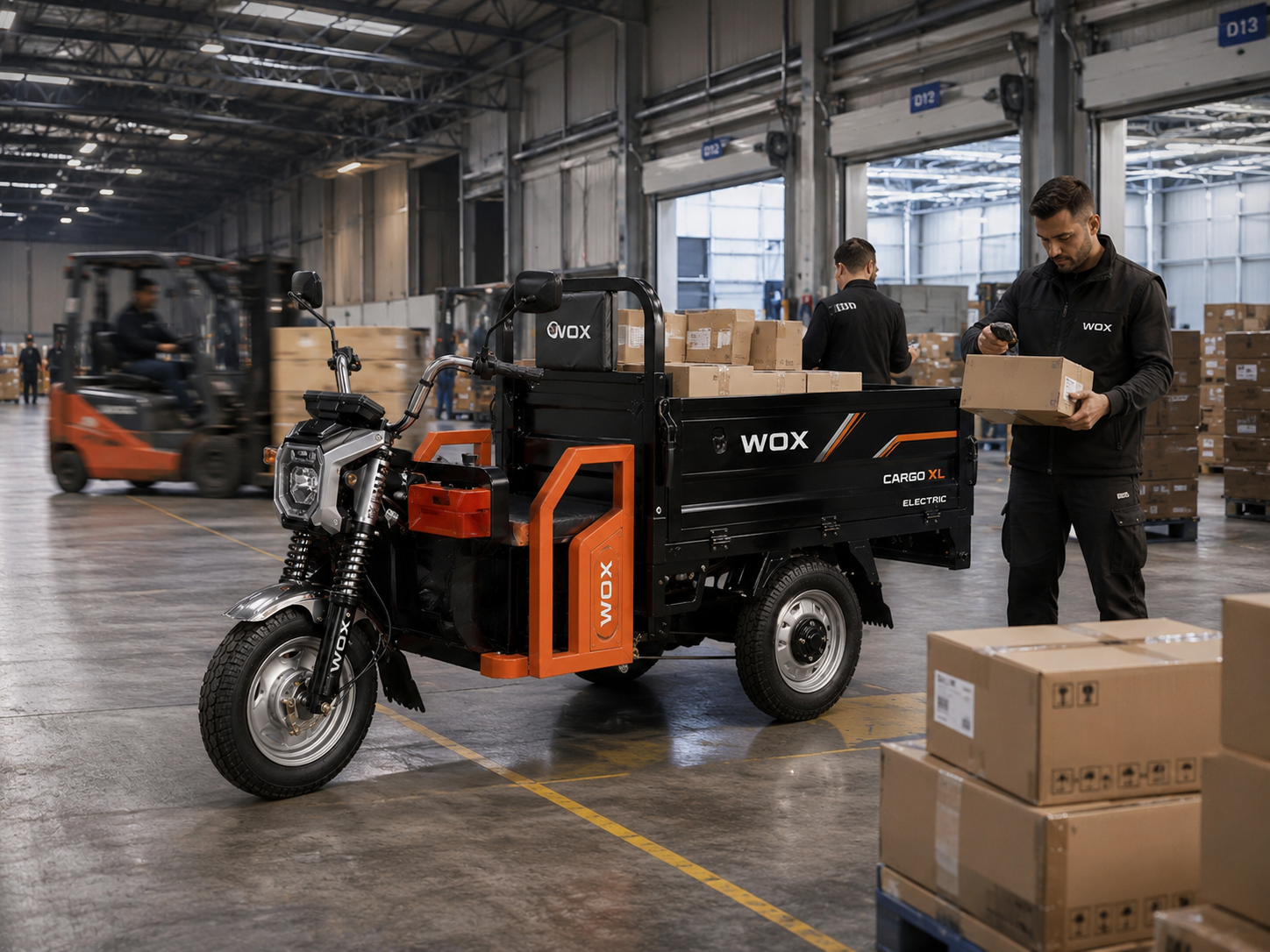
A practical example: WOX Carry
WOX Carry is one example of a compact electric cargo platform. Multiple body configurations — enclosed cabin, open flatbed, canopy cargo bed — are available to suit different operational requirements.
Designed for urban logistics, last-mile delivery and campus operations where compact dimensions, electric powertrain and lower running costs align with operational requirements.
Not positioned as a pickup truck replacement for heavy-duty, rural or towing applications.
Which business type suits which platform?
| Business type | Compact cargo | Pickup truck |
|---|---|---|
| Urban courier / parcel delivery | Recommended | Suitable |
| Food delivery (restaurant) | Recommended | Suitable |
| Florist / small retail | Recommended | Suitable |
| Pharmacy / medical supply | Recommended | Suitable |
| Campus / university logistics | Recommended | Limited |
| Hotel / resort operations | Recommended | Limited |
| Municipal / park maintenance | Recommended | Suitable |
| Hardware / building materials | Suitable (light) | Recommended |
| Construction / trade | Not recommended | Recommended |
| Agriculture / farm logistics | Suitable | Recommended |
| Rural / long-distance delivery | Limited | Recommended |
| Towing / equipment transport | Not recommended | Recommended |
Frequently asked questions
Evaluating compact cargo vehicles for your business?
WOX Motor works with fleet operators, small businesses and distributors on commercial vehicle procurement.
Join the Ecosystem