
Commercial Vehicle Comparison Guide
Electric Cargo Vehicles
vs Small Delivery Vans
An objective, category-by-category comparison across purchase price, operating costs, maintenance, parking, urban access, payload, running costs and environmental impact — with a clear verdict on which applications favour each platform.
7
Electric wins
2
Context-dependent
3
Van wins
Full Comparison
12 dimensions, side by side
Each dimension is assessed independently. The verdict reflects which platform holds a genuine operational advantage — not a marketing position.
Purchase price
Used van market narrows the gap for budget buyers.
USD 3,000–12,000 (new)
USD 15,000–35,000 (new)
Energy / fuel cost per km
Advantage strongest on urban stop-start routes.
60–80% lower than diesel
Moderate–high; volatile
Maintenance cost
Battery longevity is the key long-term variable.
Lower — fewer moving parts
Higher — engine, gearbox, exhaust
Parking
Advantage greatest in dense urban environments.
Compact — fits narrow spaces
Full bay required
Urban access
LEZ advantage growing as restrictions expand.
LEZ unrestricted; narrow streets; indoor
LEZ restricted (diesel); wider footprint
Payload capacity
Van holds clear advantage for heavy or bulky loads.
250–600 kg typical
600–1,000 kg typical
Cargo volume
Van suited to large-parcel or high-volume routes.
1–3 m³ typical
5–8 m³ typical
Range / route distance
Electric best for routes under 100–150 km/day.
Urban routes; limited long-distance
Urban + rural + motorway
Running costs (total)
Depends on route profile, charging access and market.
Lower for urban operations
Higher for urban; competitive long-distance
Environmental impact
Lifecycle advantage depends on grid carbon intensity.
Zero tailpipe; lower lifecycle (grid-dependent)
Direct CO₂, NOₓ, particulate emissions
Fleet scalability
Electric scales well in urban; van easier in rural markets.
Lower per-unit cost; charging infra required
Established networks; higher per-unit cost
Regulatory compliance
LEZ and ZEZ expansion accelerating globally.
Future-proof for urban access rules
Increasing restriction risk (diesel)
Electric Cargo Vehicle
When the electric platform is the better choice
Compact electric cargo vehicles hold a genuine operational advantage in the following scenarios. If your operation matches one or more of these profiles, the electric platform is likely the more cost-effective and practical choice.
Dense urban delivery
Many stops, narrow streets, parking-constrained environments where compact access and fast stop completion matter most.
Low-emission zone operations
Cities with active LEZ or ZEZ restrictions where diesel access is limited, restricted or subject to daily surcharge.
Small-parcel, high-frequency
Courier parcels, pharmacy, food delivery, retail supply — where cargo volume per trip is moderate and route distances are short.
Campus and resort logistics
Hotels, universities, industrial parks and airports where access, noise and emissions are operational requirements.
Cost-sensitive markets
Operations where lower acquisition price and fuel savings are the primary commercial driver for fleet investment.
Sustainability commitments
Municipal, public sector and corporate fleets with net-zero or emissions-reduction targets and urban access requirements.
Small Delivery Van
When the van remains the better choice
Small vans retain clear practical advantages in the following scenarios. Operators whose requirements match these profiles should not assume the electric platform is automatically the right choice.
High-payload delivery
Cargo requirements above 600 kg per trip or cargo volume above 3 m³ — furniture, building materials, bulk wholesale.
Long-distance or rural routes
Routes exceeding 100–150 km per day, rural delivery areas or operations requiring motorway-speed transport.
Limited charging infrastructure
Markets or depots where reliable overnight charging cannot be arranged and public charging networks are sparse.
Established service networks
Operations in markets where electric platform servicing, parts availability and technical support are not yet mature.
Operating Cost Analysis
Where the cost difference is made
The operating cost advantage of electric cargo vehicles is not uniform across all operations. Understanding where it is strongest — and where it narrows — is essential for making an informed fleet decision.
Where the electric advantage is strongest
Urban stop-start routes
Diesel consumption highest in stop-start traffic. Electric efficiency is consistent regardless of traffic density.
High-frequency daily runs
Multiple short trips per day compound the per-trip energy saving. 10 trips × lower cost = significant daily saving.
Markets with low electricity tariffs
Where electricity is cheap relative to diesel, the per-km cost gap is widest.
Overnight depot charging
Off-peak charging rates further reduce energy cost. Operators with depot charging access maximise the advantage.
Where the electric advantage narrows
Long-distance motorway routes
Diesel efficiency improves at constant motorway speed. Electric range limitations add charging time cost.
High electricity tariff markets
In markets where electricity costs are elevated, the per-km gap narrows. Local assessment is required.
Public charging dependency
Public charging is typically more expensive than depot charging. Operators without depot access see a reduced advantage.
Rural or low-density routes
Fewer stops per km reduces the stop-start efficiency advantage. Range anxiety adds operational complexity.
A Practical Example
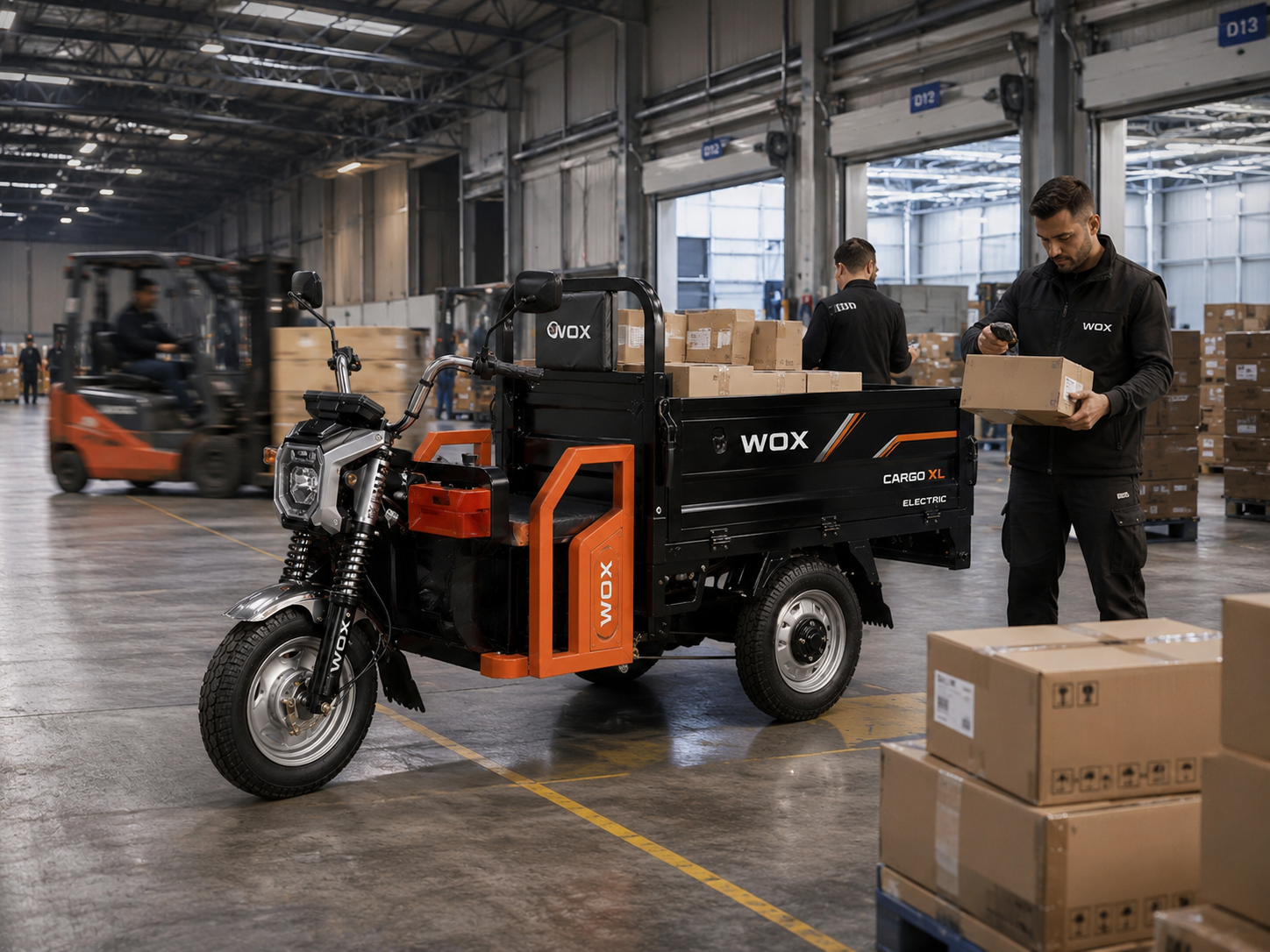
WOX Carry: one example of the electric cargo platform
The WOX Carry illustrates how a purpose-built compact electric cargo platform addresses the urban delivery use case. Available in multiple body configurations — enclosed cargo cabin, open flatbed, canopy-covered cargo bed and passenger variants — it is designed for operators who need flexibility across different commercial applications within the same fleet.
It is not positioned as a van replacement for all use cases. It is positioned as the right tool for the specific operational environments where compact electric platforms hold a genuine advantage — urban access, operating cost, regulatory compliance and fleet scalability in cost-sensitive markets.
Business Suitability
Which vehicle type suits which business?
Business type, route profile and cargo requirements are the primary determinants of which platform is more suitable. This matrix provides a starting point — not a substitute for operational assessment.
FAQ
Frequently asked questions
Evaluating electric cargo vehicles for your fleet?
WOX Motor works with fleet operators, small businesses and distributors on commercial vehicle procurement. Contact us to discuss your specific operational requirements.
Related Reading