Why Last-Mile Delivery Is Changing Worldwide
The final kilometre of a delivery journey has become the most complex, costly and consequential segment of global logistics. Discover the forces reshaping last-mile delivery — and why the industry's response is increasingly electric, compact and data-driven.
Executive Summary: Last-mile delivery — the final stage of moving goods from a distribution point to the end customer — has become the defining challenge of modern urban logistics. Driven by accelerating urbanisation, the sustained growth of e-commerce, rising operating costs and tightening environmental regulation, the industry is undergoing a structural transformation. This article examines the forces behind that change and explains why compact, electric commercial vehicles are emerging as a central part of the solution.
Introduction
Of all the stages in a modern supply chain, the last mile is simultaneously the shortest and the most difficult to optimise.
A container ship can move thousands of tonnes of goods across an ocean at a cost of a few dollars per tonne. A long-haul truck can cover hundreds of kilometres in a single shift with predictable fuel consumption and a well-established operational model. But the final kilometre — from a local depot or urban distribution hub to the door of a home, restaurant, hotel or business — is where logistics economics become genuinely challenging.
Industry analysis consistently places last-mile delivery costs at between 41 and 53 percent of total supply chain expenditure. In dense urban environments, that figure can be higher. And as the volume of urban deliveries continues to grow, the pressure on operators to find more efficient, more sustainable and more cost-effective approaches to this final stage is intensifying.
Understanding why last-mile delivery is changing requires looking at several converging forces — none of which shows signs of reversing.
Urbanisation: The Structural Backdrop
The global urban population has more than doubled since 1980 and continues to grow. According to United Nations projections, approximately 68 percent of the world's population will live in urban areas by 2050, compared with around 56 percent today. In absolute terms, this represents the addition of roughly 2.5 billion urban residents over the next three decades, concentrated primarily in Asia, Africa and Latin America.
This demographic shift has direct consequences for logistics. Urban populations generate higher per-capita consumption of goods and services than rural populations. They live in denser environments where delivery addresses are closer together but road access is more constrained. And they increasingly expect the same delivery speed and convenience that early adopters in established e-commerce markets have come to regard as standard.
For logistics operators, urbanisation means more deliveries, more complex routing, more restricted access and more competition for limited road space — all simultaneously.
The cities growing fastest are also, in many cases, the least well-served by existing logistics infrastructure. Informal distribution networks, inadequate road systems and limited cold-chain capacity create operational challenges that purpose-built, compact delivery platforms are better positioned to address than adapted full-size vehicles.
E-Commerce: The Demand Accelerator
The growth of online retail has been the single most significant driver of last-mile delivery volume over the past decade, and the trajectory shows no sign of flattening.
Global e-commerce sales exceeded five trillion US dollars in 2023 and are projected to approach eight trillion by 2027. In markets such as China, South Korea and the United Kingdom, online retail already accounts for more than a quarter of total retail sales. In rapidly growing markets across Southeast Asia, the Middle East and Latin America, e-commerce penetration is accelerating from a lower base but at a faster rate.
Each online transaction generates a delivery requirement. Unlike traditional retail, where goods move in bulk from manufacturer to warehouse to store, e-commerce requires individual parcels to be delivered to individual addresses — often within tight time windows, with tracking, proof of delivery and, increasingly, same-day or next-day service expectations.
This shift from bulk distribution to individualised delivery has fundamentally changed the economics of last-mile logistics. The number of delivery stops per route has increased. Average parcel size has decreased. The geographic spread of delivery addresses has widened. And the tolerance for failed delivery attempts — which generate costly re-delivery requirements — has narrowed.
The result is a delivery model that demands more vehicles, more drivers, more fuel and more operational complexity than the logistics infrastructure of the previous generation was designed to provide.
Rising Operating Costs: The Margin Pressure
For fleet operators and logistics companies, the economics of last-mile delivery have become increasingly difficult to manage.
Fuel costs represent the most visible component of operating expense, and their volatility creates planning challenges that compound the structural cost pressures described above. A diesel van completing 150 urban delivery stops per day in a congested city centre spends a significant proportion of its operating time idling in traffic — consuming fuel without generating productive output.
Driver costs have risen substantially in most markets, driven by labour market tightening, regulatory requirements around working hours and the growing complexity of urban delivery operations. In many regions, driver shortages are now a more significant constraint on delivery capacity than vehicle availability.
Maintenance costs for internal combustion engine vehicles operating in stop-start urban conditions are higher than for the same vehicles on motorway routes. Frequent braking, low-speed operation and the thermal stress of urban driving accelerate wear on engines, brakes and transmissions.
Insurance, compliance and regulatory costs have also increased, particularly for operators running fleets in markets with active low-emission zone enforcement, congestion charging or vehicle access restrictions.
The cumulative effect of these pressures is a sustained compression of margins in last-mile logistics — and a strong commercial incentive to find operating models that reduce cost per delivery.
Traffic Congestion: The Operational Constraint
Urban traffic congestion is not a new problem, but its impact on last-mile delivery economics has intensified as delivery volumes have grown.
A delivery vehicle that spends 40 percent of its operating time stationary in traffic is, from a logistics perspective, a vehicle that is delivering nothing while consuming fuel, driver time and vehicle capacity. In the most congested urban environments, average delivery speeds have fallen to levels that make traditional van-based delivery models economically marginal.
City authorities are responding to congestion with a range of measures that directly affect delivery operations. Low-emission zones restrict or prohibit access for older diesel vehicles. Time-restricted delivery windows limit when commercial vehicles can operate in certain areas. Pedestrianisation schemes remove road access entirely from commercially valuable retail and residential zones.
These restrictions are expanding. London's Ultra Low Emission Zone, Paris's progressive diesel restrictions, and similar schemes in cities across Europe, Asia and Latin America are creating a regulatory environment in which the ability to operate a small, clean, low-impact vehicle is becoming a prerequisite for accessing the most commercially important urban delivery locations.
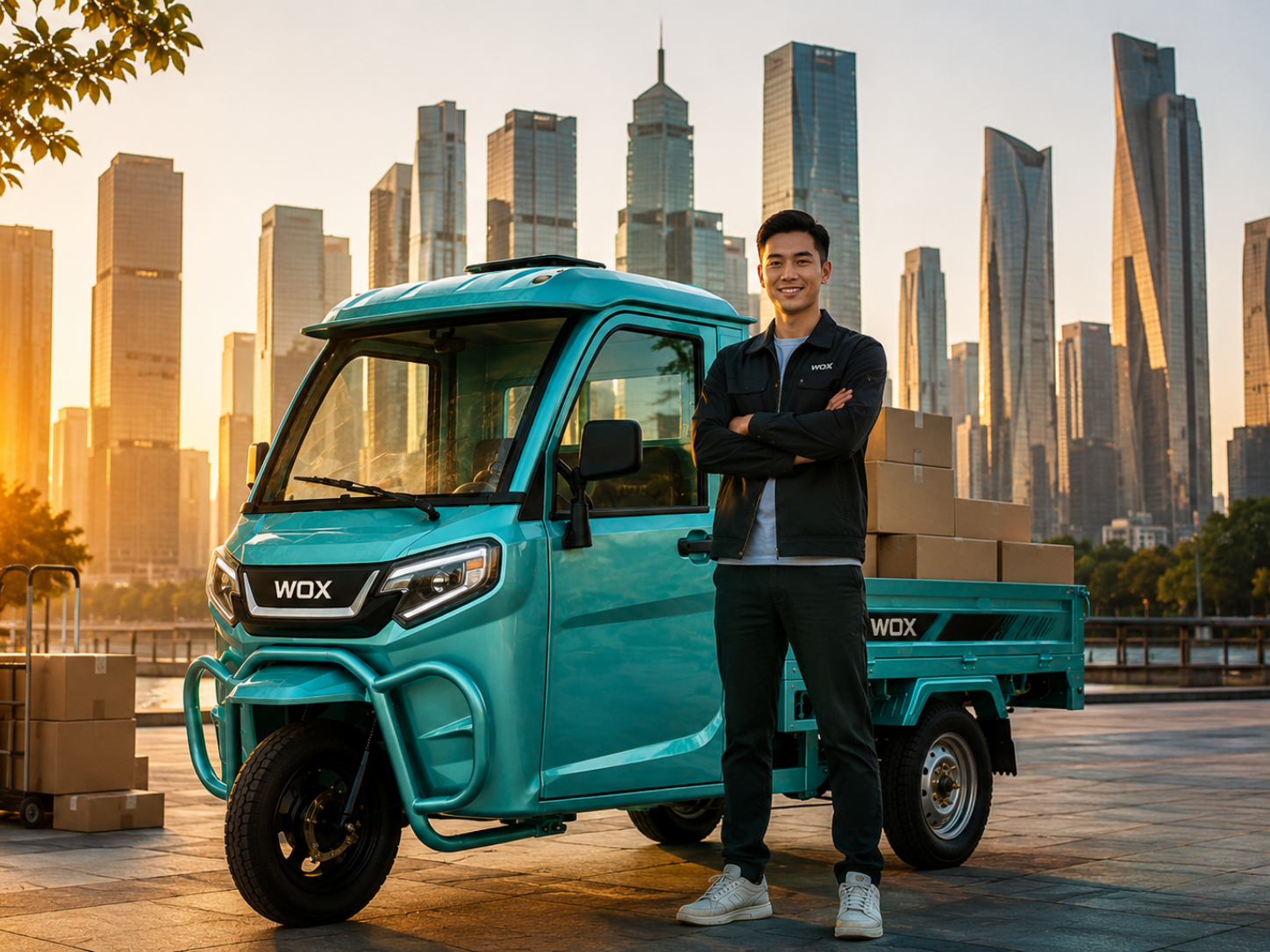
Compact electric commercial vehicles — which can navigate narrower streets, park in smaller spaces, operate silently and comply with emissions restrictions without modification — are structurally better suited to this environment than full-size diesel vans.
Sustainability: The Regulatory and Commercial Imperative
The environmental impact of urban freight is significant and increasingly well-documented. Commercial vehicles account for a disproportionate share of urban air pollution, noise pollution and carbon emissions relative to their share of road traffic.
Regulatory pressure to reduce these impacts is intensifying across multiple jurisdictions simultaneously. The European Union's Commercial Vehicles Regulation sets binding CO₂ reduction targets for new commercial vehicles. National and municipal governments are implementing zero-emission delivery zone requirements with defined implementation timelines. And corporate sustainability commitments from major retailers and logistics companies are creating downstream pressure on fleet operators to demonstrate measurable emissions reductions.
Beyond regulatory compliance, sustainability has become a commercial consideration in its own right. Large retail and e-commerce companies are increasingly requiring their logistics partners to demonstrate environmental credentials as a condition of contract. Consumers in many markets express a preference for sustainable delivery options and are willing to pay a modest premium for them.
For fleet operators, the transition to electric commercial vehicles is therefore driven by a combination of regulatory necessity, commercial opportunity and long-term cost economics — not solely by environmental conviction.
Fleet Optimisation: The Data Dimension
The transformation of last-mile delivery is not only about the vehicles. It is also about how fleets are managed, routed and optimised.
Modern fleet management software enables operators to monitor vehicle location, battery state, delivery progress and driver behaviour in real time. Route optimisation algorithms can reduce the distance driven per delivery stop by 15 to 25 percent compared with manually planned routes. Predictive maintenance systems can identify component wear before it causes vehicle downtime.
These capabilities are particularly valuable for electric commercial vehicle fleets, where range management, charging scheduling and battery health monitoring require more active management than equivalent diesel operations. The integration of fleet software with charging infrastructure — allowing vehicles to be charged at the lowest-cost times and ensuring that charging capacity is available when needed — is becoming a standard requirement for operators running electric fleets at scale.
The data generated by connected electric commercial vehicles also provides operators with detailed visibility into delivery performance, cost per stop and vehicle utilisation — enabling continuous improvement of operational efficiency in ways that were not possible with older, unconnected fleets.
The Role of Compact Electric Commercial Vehicles
Against this backdrop, the growth of compact electric commercial vehicles as a distinct product category is not a coincidence. It reflects a direct response to the operational requirements that the forces described above have created.
A compact electric commercial platform offers several advantages that are specifically relevant to urban last-mile delivery:
Access. Compact dimensions allow operation in locations inaccessible to full-size vans — narrow streets, pedestrianised zones, indoor logistics facilities, campus environments and resort properties.
Cost per delivery. Lower fuel costs, reduced maintenance requirements and higher delivery density per route reduce the cost per delivery stop compared with larger vehicles on equivalent urban routes.
Regulatory compliance. Electric operation ensures compliance with low-emission zone requirements without modification or exemption applications.
Operational flexibility. Modular body configurations — enclosed cargo, open flatbed, canopy-covered bed, passenger variants — allow a single platform to serve multiple commercial applications within the same fleet.
Scalability. Consistent specifications across a compact electric platform simplify fleet management, driver training and maintenance operations for operators running multiple vehicles.
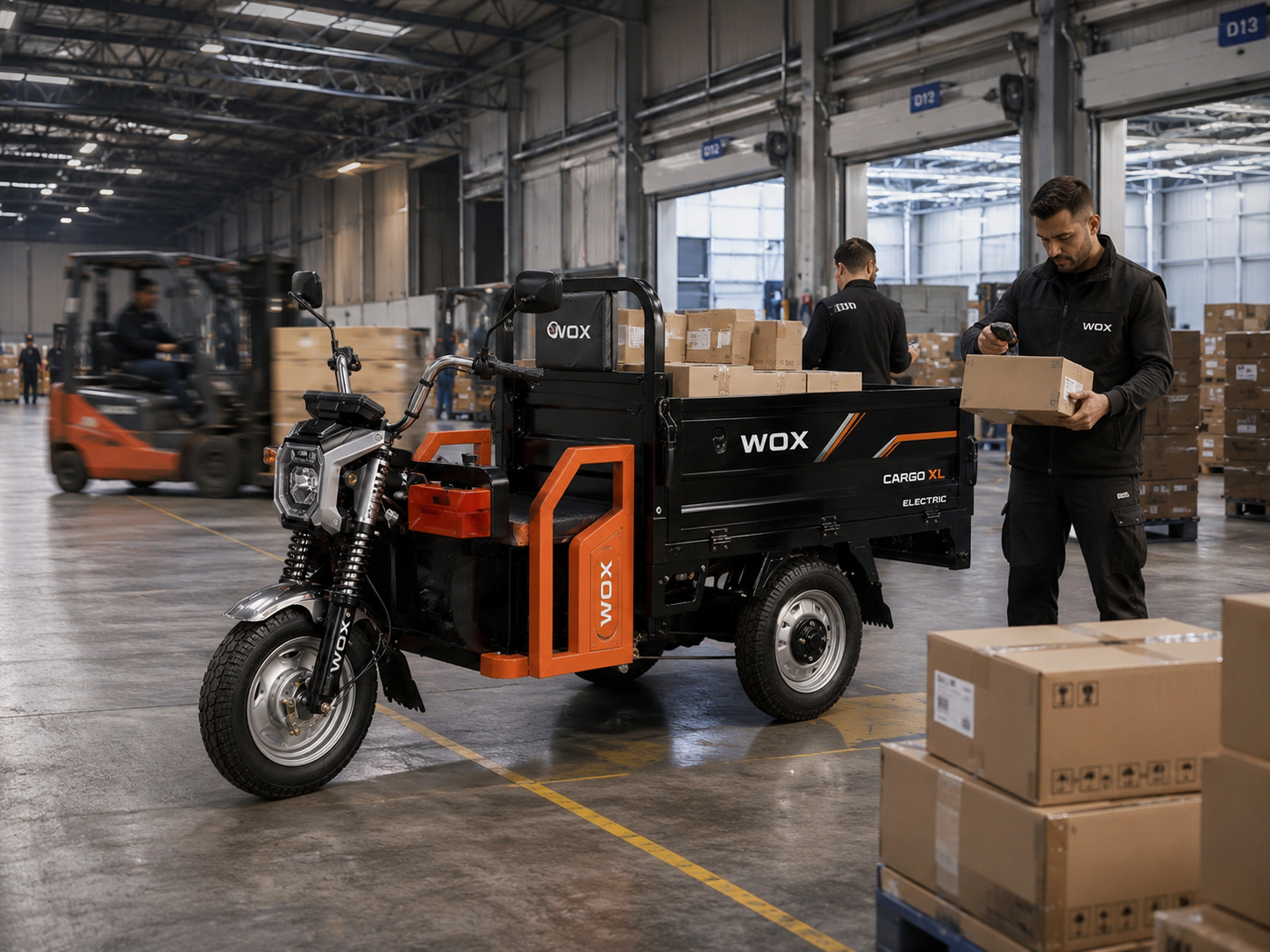
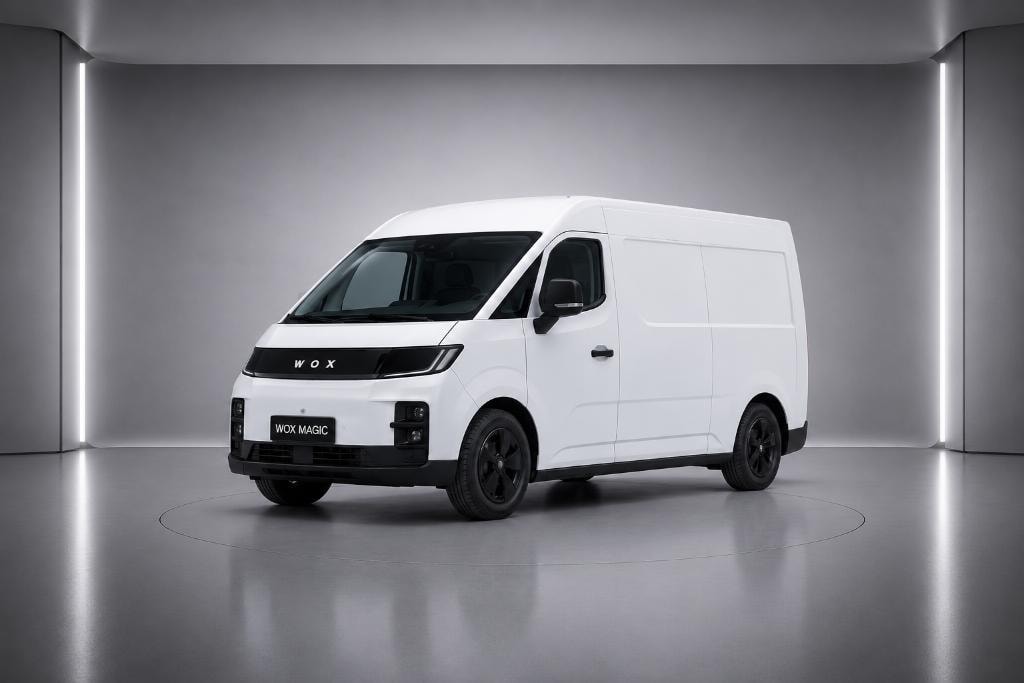
Manufacturers including WOX Motor, with its Carry electric cargo platform, are developing purpose-built compact commercial EVs specifically for these use cases — targeting the urban logistics, last-mile delivery, municipal operations and small business transport segments where the operational advantages of compact electric platforms are most pronounced.
The WOX Carry, for example, is designed around the practical requirements of operators in fast-growing urban markets: electric powertrain options from 500W to 1,200W, multiple body configurations, compact dimensions suited to dense urban environments and a payload capacity matched to the parcel sizes and delivery frequencies typical of last-mile operations.
The Road Ahead
The forces driving the transformation of last-mile delivery are structural, not cyclical. Urbanisation will continue. E-commerce volumes will continue to grow. Regulatory pressure on urban freight emissions will continue to intensify. And the economics of electric operation will continue to improve as battery costs decline and charging infrastructure becomes more widely available.
Fleet operators and logistics companies that begin adapting their vehicle mix and operational models now will be better positioned to manage these changes than those who delay. The transition is not instantaneous — it requires investment in vehicles, charging infrastructure, fleet management software and driver training. But the direction of travel is clear, and the commercial case for compact electric commercial vehicles in urban last-mile delivery is strengthening with each passing year.
The last mile has always been the hardest part of the delivery journey. The tools available to navigate it are finally catching up with the challenge.
Frequently Asked Questions
What is last-mile delivery? Last-mile delivery refers to the final stage of a supply chain — the movement of goods from a local distribution hub or depot to the end customer. It is typically the most expensive and time-intensive segment of the delivery journey, accounting for up to 53 percent of total shipping costs in many markets.
Why is last-mile delivery becoming more expensive? Rising fuel costs, urban traffic congestion, driver shortages, increasing delivery frequency and the growing complexity of urban access restrictions are all contributing to higher last-mile operating costs. The shift toward same-day and next-day delivery expectations has further compressed margins for logistics operators.
How are electric vehicles changing last-mile delivery? Electric commercial vehicles reduce per-kilometre fuel costs significantly, require less routine maintenance than diesel equivalents and can operate in low-emission zones without restriction. For high-frequency, short-distance urban delivery routes, the economics of electric operation are increasingly compelling.
What types of vehicles are used for last-mile delivery? Last-mile delivery vehicles range from cargo bikes and motorcycles to compact electric cargo vehicles, vans and autonomous delivery platforms. The optimal vehicle type depends on payload requirements, delivery density, urban access conditions and operating cost targets.
Why are compact commercial vehicles growing in popularity for urban logistics? Compact commercial vehicles can access locations that full-size vans cannot, operate in pedestrianised zones and narrow streets, require less parking space and carry lower operating costs per delivery. As urban access restrictions tighten and delivery density increases, their practical advantages are growing.
Related Reading
- The Future of Urban Delivery Is Smaller, Smarter and Electric
- Three-Wheel Cargo Vehicle vs Delivery Scooter: Full Comparison
- Buyer's Guide: Best Electric Cargo Vehicle for Small Businesses
- Explore the WOX Carry Commercial Platform
- WOX Carry for Last-Mile Delivery
- Fleet Solutions and Commercial Enquiries
- WOX Motor Technology Overview
- Become a WOX Distributor