
Buyer's Guide
Best Electric Cargo Vehicle for Small Businesses
Choosing the right electric cargo vehicle is one of the most consequential operational decisions a small business can make. This guide covers the eight factors that matter most — so you can evaluate platforms objectively and choose the one that fits your operation.
Why the right vehicle choice matters more than most small businesses realise
The electric cargo vehicle market has expanded rapidly. More platforms, more specifications, more price points. For a small business operator, this creates a genuine evaluation challenge: the wrong choice means a vehicle that doesn't fit the route, the load, or the growth trajectory.
The right choice reduces operating costs, improves delivery reliability and positions the business for fleet expansion without switching platforms. Getting this decision right the first time is significantly less expensive than correcting it later.
60–80%
Typical energy cost saving vs diesel on urban routes
3–5 yrs
Typical payback period on electric platform premium
1 platform
Ideal: one platform that scales from 1 to 10+ vehicles
8 factors to evaluate before you buy
Work through each criterion in order. The first three — payload, daily mileage and charging — are eliminators. If a platform fails any of them for your operation, it's not the right choice regardless of price.
How much does your heaviest daily load weigh?
Payload is the first eliminator. Calculate your heaviest realistic daily load — not average, heaviest. Add 15% buffer for growth. If a platform's rated payload is below that number, remove it from consideration. Common small business ranges: food delivery 50–150 kg, pharmacy 30–80 kg, florist 60–120 kg, small retail 100–300 kg, market supply 200–500 kg.
Your number: Maximum single-trip load × 1.15 = minimum platform payload rating required.
How many kilometres does your vehicle cover per day?
Range determines whether a platform can complete your route on a single charge. Calculate your longest realistic daily route — not average, longest. Add 20% buffer for detours and traffic. Most urban small business operations fall within 40–80 km per day, which most modern electric cargo platforms cover comfortably. Operations above 100 km per day require careful range verification.
Your number: Longest daily route × 1.20 = minimum platform range required.
Where and when will the vehicle charge?
Charging is the most commonly underestimated factor. The ideal scenario is overnight depot charging — the vehicle charges while the business is closed, arrives fully charged each morning. If depot charging is not possible, assess public charging availability on your route. Most electric cargo platforms charge from standard AC supply (220V/16A) overnight. Fast DC charging reduces charge time but requires infrastructure investment.
Your answer: Depot charging available? If yes, overnight AC charging is sufficient for most operations. If no, map public charging on your route before committing.
What is your tolerance for unplanned downtime?
Electric platforms have significantly fewer moving parts than diesel equivalents — no engine oil, no exhaust, no gearbox. Routine maintenance is typically limited to tyres, brakes and battery health monitoring. The key question is service network: is there a qualified service provider within practical distance? For a single-vehicle small business, unplanned downtime is a serious operational risk. Verify service coverage before purchase.
Your question: Who services this platform within 50 km of my depot? Get a name and contact before you commit.
Are you buying one vehicle or building a fleet?
If you are buying a single vehicle today but expect to operate 3–5 vehicles within three years, platform scalability matters. A platform with a strong distributor network, available spare parts and a track record of fleet deployments reduces risk as you scale. Buying a platform that is well-suited for one vehicle but difficult to service at scale creates a forced platform switch later — which is expensive and disruptive.
Your question: Does this platform have documented fleet deployments of 5+ vehicles? Is the distributor set up to support a growing fleet?
What cargo configuration does your operation require?
Electric cargo platforms are available in multiple body configurations. The right configuration depends on what you carry and how you load it. Common configurations: enclosed cabin (weather protection, security, temperature control), open flatbed (large or irregular items, easy loading), canopy cargo bed (covered but open-sided, common for market and food delivery), refrigerated body (temperature-sensitive goods). Verify that your required configuration is available on the platform before purchase — not all platforms support all body types.
Your requirement: List the three most common cargo types you carry. Match each to a body configuration. Confirm that configuration is available.
Where does your vehicle operate — urban, peri-urban or rural?
Operating environment affects platform choice in three ways. Urban: compact footprint, low-emission zone compliance and parking access matter most. Peri-urban: range and road surface capability become relevant. Rural: charging infrastructure availability and ground clearance are critical. Most electric cargo platforms are optimised for urban and peri-urban environments. For predominantly rural operations, verify range and charging access carefully.
Your profile: What percentage of your routes are urban / peri-urban / rural? If rural exceeds 30%, verify range and charging access specifically for those routes.
What is the total cost over 3–5 years, not just the purchase price?
Purchase price is one input. Total cost of ownership over 3–5 years includes: acquisition cost, energy cost (electricity vs diesel), maintenance cost, insurance, road tax, and residual value. For urban operations, electric platforms typically have lower total cost than diesel equivalents over 3–5 years, primarily driven by energy and maintenance savings. Build a simple TCO model before purchase: acquisition + (annual running cost × years) − residual value.
Your model: Acquisition cost + (energy + maintenance + insurance + tax) × 3 years − estimated residual value = 3-year TCO. Compare platforms on this number, not purchase price.
Body type reference guide
Most electric cargo platforms offer multiple body configurations. Here is a quick reference for matching body type to business type.
Enclosed cabin
Best for
Pharmacy, medical supply, high-value retail, food delivery in all weather
Key benefit
Driver comfort, cargo security, weather protection
Consideration
Higher acquisition cost than open configurations
Open flatbed
Best for
Construction materials, market supply, large irregular items
Key benefit
Easy loading/unloading, maximum flexibility
Consideration
No weather protection for cargo or driver
Canopy cargo bed
Best for
Food delivery, florist, small retail, market stalls
Key benefit
Covered cargo, open sides for fast loading
Consideration
Partial weather protection only
Refrigerated body
Best for
Food service, pharmaceutical, fresh produce
Key benefit
Temperature-controlled cargo
Consideration
Higher cost; verify temperature range for your product
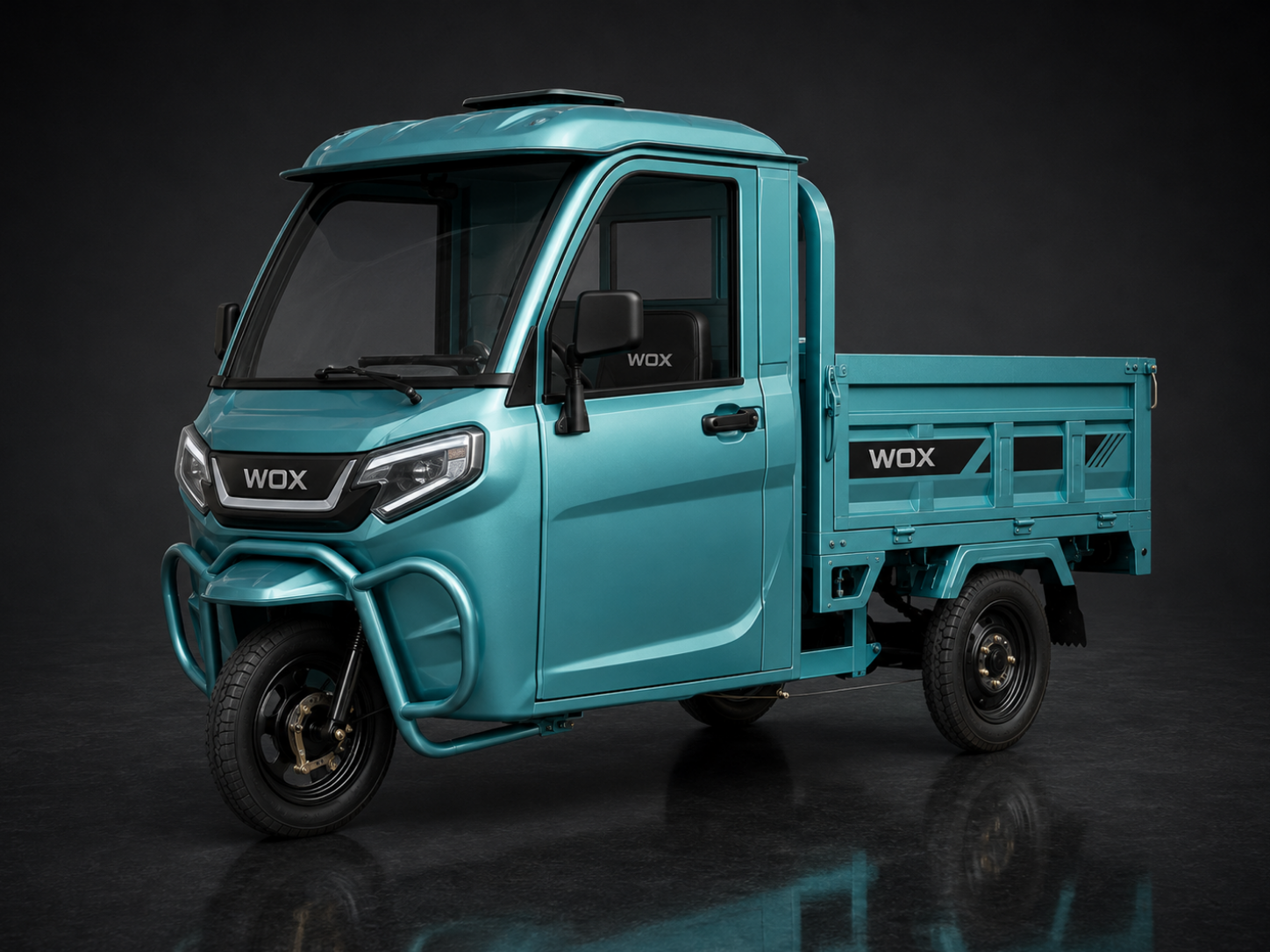
One platform worth evaluating: WOX Carry
This guide is platform-neutral. The evaluation criteria above apply to any electric cargo vehicle. That said, one platform that consistently meets the criteria for small business urban operations is the WOX Carry — and it is worth including in your shortlist.
The WOX Carry is a purpose-built electric cargo tricycle available in multiple body configurations — enclosed cabin, open flatbed and canopy cargo bed.
WOX Carry is one option among several. Evaluate it against the criteria in this guide alongside other platforms before making a decision.
Your pre-purchase evaluation checklist
Before committing to any electric cargo platform, work through this checklist. Every item should have a confirmed answer.
Calculated maximum payload requirement (with 15% buffer)
Calculated maximum daily range requirement (with 20% buffer)
Confirmed platform payload rating meets requirement
Confirmed platform range meets requirement
Identified charging location (depot or public)
Confirmed overnight charge time fits operational schedule
Identified nearest qualified service provider
Confirmed service provider covers this platform
Confirmed required body configuration is available
Verified low-emission zone compliance for operating area
Confirmed platform footprint fits parking and loading areas
Obtained insurance quote for this platform
Calculated 3-year total cost of ownership
Compared TCO against at least one alternative platform
Confirmed distributor has fleet deployment experience
Identified spare parts availability and lead time
The most common mistakes small businesses make when buying a cargo vehicle
Buying on purchase price alone
The cheapest platform is rarely the lowest total cost. A platform that costs 20% less to buy but 40% more to run over three years is the more expensive choice. Always calculate TCO.
Underestimating payload
Operators consistently underestimate their heaviest loads. A vehicle that is regularly loaded above its rated payload degrades faster and creates safety risk. Add a 15% buffer to your maximum load calculation.
Ignoring service network
A platform with no qualified service provider within practical distance is an operational liability. One breakdown with no local service support can cost more in lost revenue than the price difference between platforms.
Not planning for growth
A platform that is right for one vehicle today may not be right for five vehicles in two years. If you expect to grow, verify that the platform, distributor and service network can support a fleet.
Frequently asked questions
Ready to evaluate electric cargo vehicles for your business?
WOX Motor works with small businesses, fleet operators and distributors on commercial vehicle procurement. Contact us to discuss your specific requirements.
Related guides and pages
Join the Ecosystem