
Buyer's Guide
Choosing the Right Urban Delivery Vehicle
A structured evaluation framework for fleet managers, small business operators and logistics teams selecting a commercial vehicle for urban delivery operations. Eight criteria, a 20-point pre-purchase checklist, a vehicle type comparison table, and a practical guide to how WOX Carry fits different commercial applications.
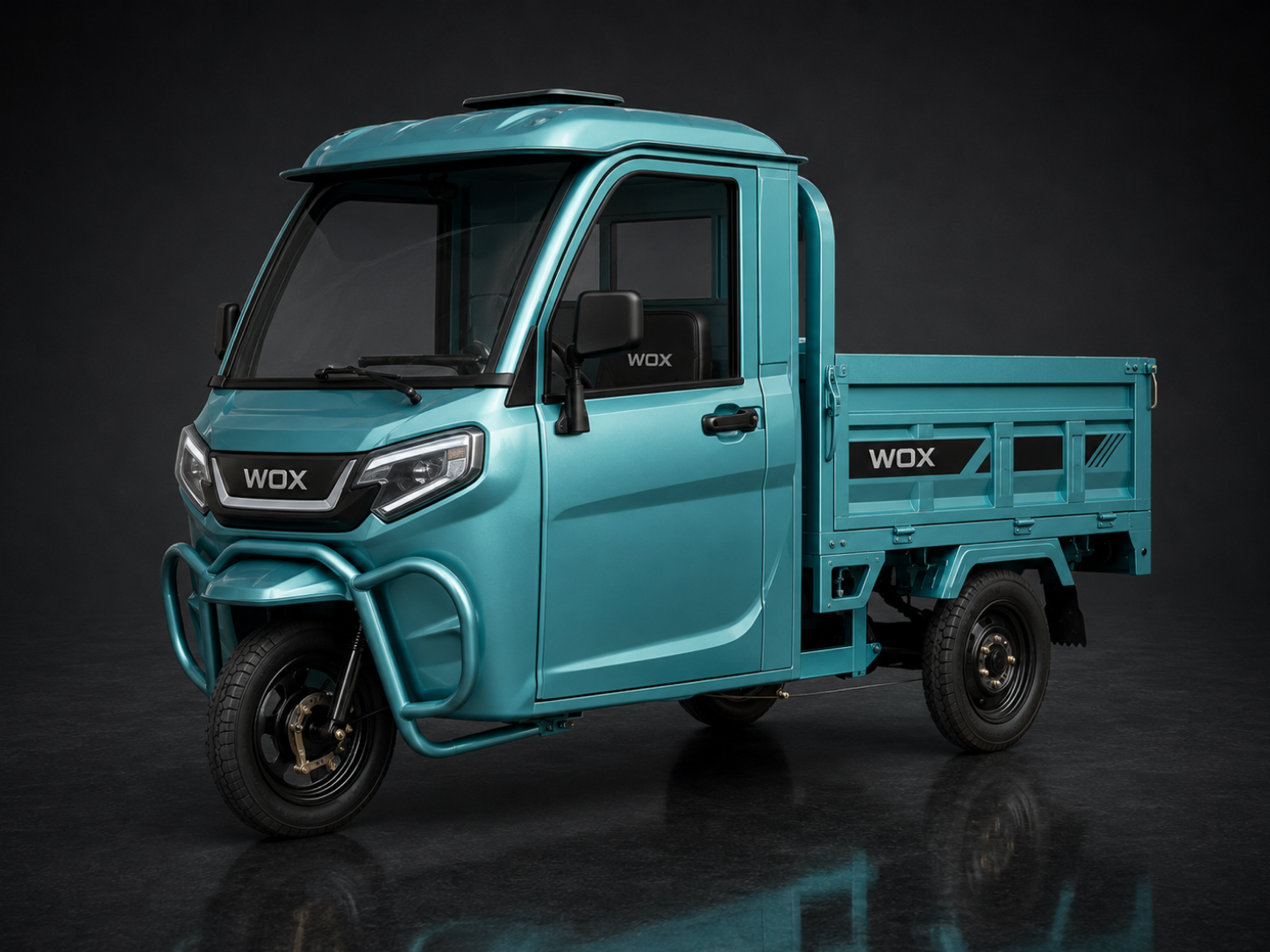
Why vehicle selection is a long-term business decision
A commercial vehicle purchase is not a short-term transaction. The platform you select will define your operational costs, driver experience, regulatory exposure and fleet scalability for the next three to seven years. Selecting the wrong vehicle — even one that appears cheaper at acquisition — can result in significantly higher total cost of ownership, operational constraints and regulatory risk as urban emission standards tighten globally.
3–7 years
Typical commercial vehicle ownership period
40–60%
Potential maintenance cost difference
200+
Cities with active LEZ schemes
Criterion 1 of 8
Business size and fleet structure
Sole trader
Single operator, 1–2 vehicles. Prioritise low acquisition cost, simple maintenance and ease of operation. Standardisation is less critical.
Small fleet
3–15 vehicles. Platform standardisation becomes important for driver training and parts management. Consider service network proximity.
Medium–large fleet
15+ vehicles. Fleet standardisation, manufacturer support agreements and total cost of ownership are primary decision criteria.
Your answer: How many vehicles do you need now, and how many in 3 years?
Criterion 2 of 8
Delivery type and cargo profile
Parcel / courier
- Payload:
- 50–400 kg
- Stops:
- High (15–40/day)
- Body:
- Enclosed box or open flatbed
- Key req:
- Fast loading/unloading access
Food / grocery
- Payload:
- 50–300 kg
- Stops:
- Medium (5–20/day)
- Body:
- Enclosed cabin or insulated box
- Key req:
- Temperature protection
Bulk / market
- Payload:
- 200–600 kg
- Stops:
- Low (1–5/day)
- Body:
- Open flatbed or tipper
- Key req:
- Maximum payload capacity
Municipal
- Payload:
- 100–500 kg
- Stops:
- Variable
- Body:
- Specialist body (tipper, sweeper)
- Key req:
- Durability and low running cost
Your answer: What is your heaviest single delivery run?
Criterion 3 of 8
Daily routes and operating range
Route distance framework
- Under 40 km/day— Any electric platform is suitable. Standard overnight charging on a 240V outlet is sufficient.
- 40–80 km/day— Electric platforms with 80–120 km rated range are suitable. Verify range at operating temperature.
- 80–120 km/day— Select platforms with 120+ km range or plan for opportunity charging during the day.
- Over 120 km/day— Evaluate whether route can be split across multiple vehicles, or consider hybrid/extended-range platforms.
Charging opportunity assessment
- Depot overnight: Ideal. 8–10 hours on a 240V outlet fully charges most commercial EV platforms.
- Midday break: A 1–2 hour break at a 7kW charger adds 10–20 km range — useful buffer for longer routes.
- No depot charging: Assess public charging availability on or near your route. Urban areas typically have adequate public charging for vehicles under 80 km/day.
- Multiple shifts: If the vehicle runs two shifts per day, a 7kW dedicated charger is recommended for between-shift top-up.
Your answer: What is your longest single-day route?
Criterion 4 of 8
Payload requirements
| Operation type | Typical daily volume | Recommended min. payload | Platform type |
|---|---|---|---|
| Light parcel courier | 20–50 parcels | 150 kg | Cargo tricycle / compact EV |
| Food delivery (restaurant) | 10–30 orders | 100–200 kg | Cargo tricycle (enclosed) |
| Grocery delivery | 5–15 orders | 200–350 kg | Cargo tricycle / compact van |
| Market / bulk goods | 1–5 loads | 350–600 kg | Heavy cargo tricycle / van |
| Municipal services | Variable | 200–500 kg | Specialist body platform |
| Hotel / campus logistics | Variable | 150–400 kg | Cargo tricycle / utility EV |
Payload formula: Maximum single-trip load × 1.20 = minimum rated payload
Criterion 5 of 8
Climate and operating environment
Driver comfort by climate
- Hot climate (above 30°C regularly): Enclosed cabin with ventilation or air conditioning is strongly recommended for full-day driver shifts.
- Cold climate (below 5°C regularly): Enclosed cabin required. Factor in 15–20% range reduction for battery performance.
- Wet / rainy climate: Enclosed cabin protects both driver and cargo. Open platforms are not suitable for regular wet-weather operation.
- Temperate climate: Open or semi-open platforms are viable for short shifts. Enclosed cabin preferred for full-day operations.
Road surface considerations
- Urban paved roads: All commercial platforms are suitable. Prioritise manoeuvrability and turning radius for dense urban environments.
- Mixed paved / unpaved: Verify ground clearance and suspension specification. Not all cargo tricycle platforms are rated for unpaved surfaces.
- Steep gradients: Verify motor torque specification. Electric platforms typically perform well on gradients due to high low-speed torque.
- Narrow lanes / alleys: Verify vehicle width. Cargo tricycles (typically 1.2–1.5 m wide) have a significant access advantage over vans (1.8–2.1 m).
Your answer: What is the typical temperature range in your operating area?
Criterion 6 of 8
Charging infrastructure
Standard 240V outlet
2.3 kW / 8–12 hr full charge
Suitable for operations under 80 km/day with overnight parking. Lowest installation cost — a standard domestic or commercial outlet is sufficient.
Installation: £0–200
Dedicated 7kW charger
7 kW / 3–5 hr full charge
Recommended for operations 80–150 km/day or two-shift operations. Supports between-shift top-up. Standard for commercial depot installations.
Installation: £500–1,500
Fast charger (22kW+)
22 kW+ / under 2 hr full charge
For high-utilisation fleets or operations requiring rapid turnaround. Typically shared across multiple vehicles. Higher installation cost.
Installation: £2,000–8,000
Note: Charging costs above are indicative for UK market. Costs vary by country, existing electrical infrastructure and whether three-phase power is available at the depot. Always obtain a site survey from a qualified electrician before budgeting charging infrastructure.
Your answer: Do you have access to a 240V outlet at your depot overnight?
Criterion 7 of 8
Maintenance expectations and service network
Electric commercial vehicle
£300–600 / year
- • Annual service: brake inspection, tyre rotation, software update
- • No oil changes, no exhaust system, no fuel filter
- • Battery health check every 12–24 months
- • Brake pads last longer due to regenerative braking
- • Fewer moving parts = fewer failure points
Combustion commercial vehicle
£800–1,800 / year
- • Oil and filter change every 5,000–10,000 km
- • Air filter, fuel filter, spark plugs (petrol) or injectors (diesel)
- • Exhaust system inspection and potential replacement
- • Timing belt / chain service at manufacturer intervals
- • Higher brake wear due to no regenerative braking
Your answer: Is there an authorised service centre within practical distance?
Criterion 8 of 8
Growth planning and fleet scalability
Volume growth
Select a platform with 30–40% payload headroom above your current maximum. As delivery volumes grow, you will approach the vehicle's rated capacity — headroom prevents premature replacement.
Driver pool
Standardised platforms across your fleet simplify driver training, reduce errors and allow flexible driver allocation. A mixed fleet of different platforms increases training complexity and parts inventory.
Geographic expansion
If you plan to expand to new cities or regions, verify that the manufacturer's distribution and service network covers your target markets before committing to a platform.
Your answer: What is your realistic delivery volume in 3 years?
Vehicle type comparison: which platform fits which operation?
The table below compares the six most common urban commercial vehicle platforms across key operational criteria. Use this as a starting framework — specific models within each category vary significantly.
| Vehicle type | Payload range | Best for | Not suitable for | Acquisition cost | Maintenance cost | LEZ status |
|---|---|---|---|---|---|---|
| Cargo scooter | 10–50 kg | Single-item, short-distance food delivery | Multi-item, heavy or bulk delivery | Low | Low–Medium | ✗ Restricted |
| Cargo bicycle | 50–150 kg | Dense urban, zero-emission zones | High payload, long distance, hills | Low–Medium | Low | ✓ Exempt |
| Electric cargo tricycle | 150–600 kg | Urban delivery, food, parcel, municipal | Motorway / inter-city routes | Medium | Low | ✓ Exempt |
| Compact electric van | 400–800 kg | Higher payload urban delivery | Narrow lanes, parking-constrained areas | Medium–High | Low–Medium | ✓ Exempt |
| Diesel utility vehicle | 300–700 kg | Rural / mixed terrain delivery | LEZ areas, low running cost priority | Medium | Medium–High | ✗ Restricted |
| Diesel van | 600–1,500 kg | High payload, inter-city routes | Urban LEZ, narrow access, low cost ops | Medium–High | High | ✗ Restricted |
Pre-purchase checklist: 20 questions before you commit
Use this checklist before finalising any commercial vehicle purchase. Each question corresponds to one of the eight evaluation criteria above. If you cannot answer a question confidently, gather the information before proceeding.
What is my maximum single-trip payload, including packaging?
PayloadHave I applied the 1.20× safety margin to my payload calculation?
PayloadWhat body configuration does my cargo require?
Delivery typeDoes any cargo require temperature control?
Delivery typeWhat is my longest single-day route distance?
Daily routesDo I have overnight charging access at my depot?
ChargingWhat is the cost of installing a 240V or 7kW charger at my depot?
ChargingIs there an authorised service centre within practical distance?
MaintenanceWhat is the manufacturer's battery warranty?
MaintenanceWhat is the 3-year total cost of ownership, not just acquisition cost?
Ownership costDoes my operating area have active or planned LEZ restrictions?
RegulatoryWhat is the typical temperature range in my operating area?
ClimateDo drivers work full-day shifts requiring enclosed cabin comfort?
ClimateAre roads in my operating area predominantly paved?
EnvironmentHow many vehicles do I need now, and in 3 years?
GrowthWill I employ drivers, or operate as a sole trader?
Business sizeDoes my chosen platform standardise across my fleet?
Fleet structureWhat is the manufacturer's distribution and service network in my market?
ServiceHave I verified the vehicle's rated payload at operating temperature?
PerformanceHave I test-operated the vehicle on a representative route before purchasing?
ValidationHow WOX Carry fits different commercial applications
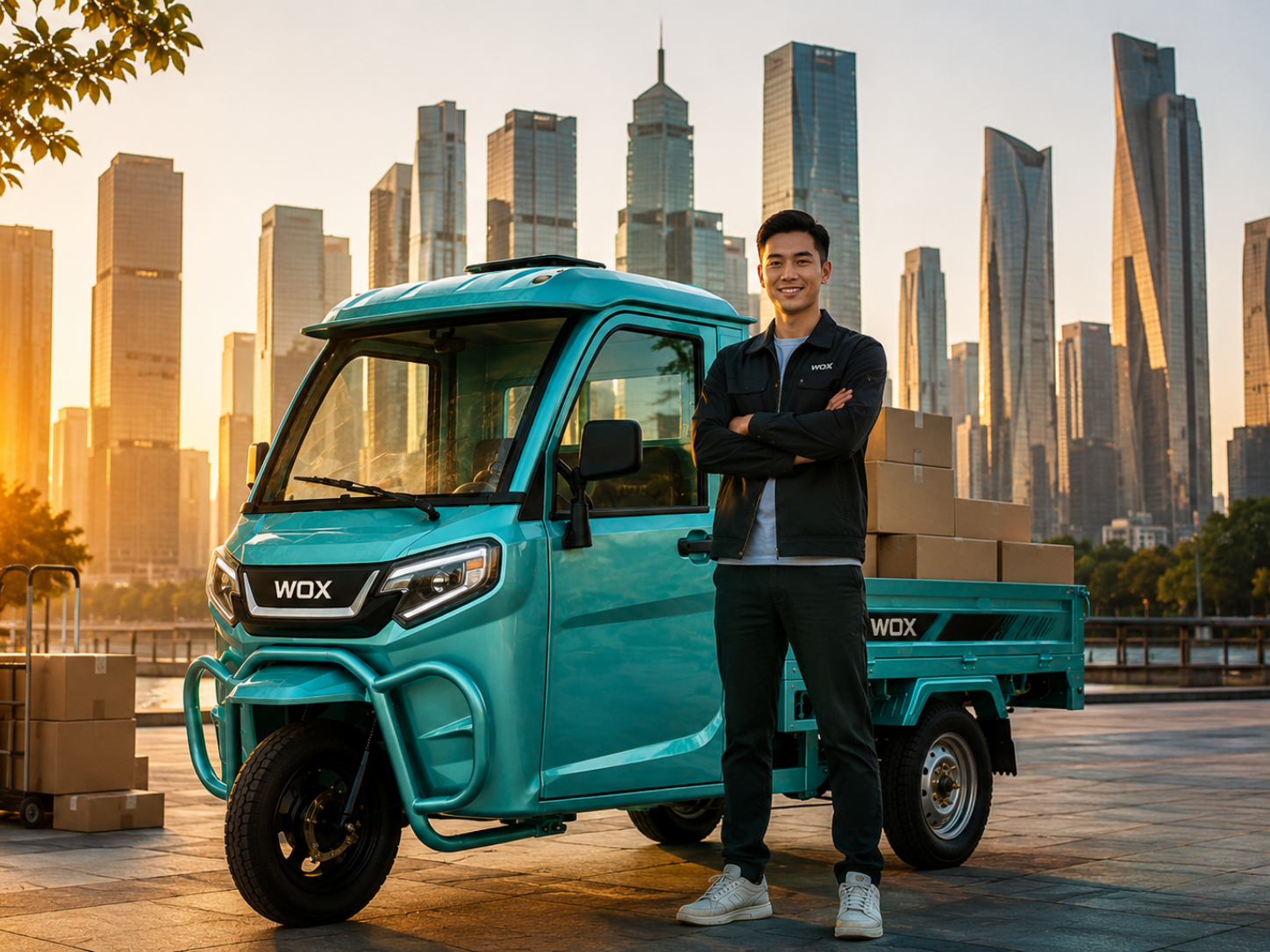
WOX Carry is an electric cargo tricycle platform designed for urban commercial operations. The following summarises how Carry maps to the delivery types and operational profiles covered in this guide.
WOX Carry is available in multiple body configurations — enclosed cabin, open flatbed, insulated box and specialist bodies — to match the cargo profiles described above.
Frequently asked questions
Ready to evaluate commercial vehicles for your operation?
Speak with the WOX Motor team to discuss your specific delivery requirements, operating environment and fleet size. We can help you identify the right platform and configuration for your operation.
Join the Ecosystem