
Commercial Vehicle Comparison Guide
Three-Wheel Cargo Vehicle vs Delivery Scooter
Two platforms that share the same urban delivery environment but serve fundamentally different operational needs. An objective comparison across stability, cargo volume, driver safety, operating costs, fleet applications and urban delivery performance.
6 dimensions, side by side
| Dimension | Three-Wheel Cargo Vehicle | Delivery Scooter | Verdict |
|---|---|---|---|
| Stability | Three-point contact; stable at rest and in motion; no balance required; suitable for all operators | Two-wheel balance required; tip risk when stationary or cornering with load; operator skill-dependent | Three-wheeler Three-wheel stability is a significant safety and accessibility advantage, particularly with heavy or uneven loads. |
| Cargo volume | 150–600 kg payload; 0.5–2.5 m³ enclosed or open cargo body; multiple configurations | 10–50 kg typical; top box or side panniers; limited by rider balance and legal restrictions | Three-wheeler Three-wheelers hold a decisive cargo volume advantage for any commercial delivery operation above light parcel work. |
| Driver safety | Enclosed cabin option; roll cage structure; no fall risk; weather protection; seat belt | Open to traffic; fall and collision risk; weather exposure; helmet required; fatigue increases risk | Three-wheeler Scooter delivery is statistically one of the higher-risk occupational roles in urban logistics. |
| Operating costs | Higher acquisition cost; lower energy cost (electric); lower insurance than motorcycles in many markets | Lower acquisition cost; low fuel/energy cost; higher insurance risk premium in some markets | Context-dependent Scooters have lower upfront cost; three-wheelers typically lower total cost per kg of cargo delivered. |
| Fleet applications | Scalable fleet platform; uniform driver experience; accessible to wider operator pool; suitable for employed drivers | Common in gig-economy models; harder to standardise; driver skill variance; higher turnover risk | Three-wheeler For employed fleet operations, three-wheelers offer more consistent, manageable driver experience. |
| Urban deliveries | Compact footprint; navigates most urban streets; LEZ-compliant (electric); parking in loading bays | Smallest footprint; fastest in congested traffic; access to cycle lanes in some markets; easiest parking | Scooter Scooters retain a genuine access and speed advantage in the most congested urban environments. |
Why stability matters more than most operators expect
Stability is not just a comfort factor — it is a safety, accessibility and operational efficiency factor. A three-wheel cargo vehicle maintains stable contact with the road at rest and in motion, regardless of load distribution. A delivery scooter requires active balance from the rider, which becomes more demanding as load weight increases, road surfaces deteriorate, or fatigue sets in over a long shift.
Load safety
Uneven or shifting loads that would destabilise a scooter are handled safely by a three-wheel platform. No tip risk at traffic stops or during loading.
Operator accessibility
Three-wheel platforms can be operated by a wider range of employees — no motorcycle licence required in many markets, no balance skill requirement.
Shift length
Scooter riders experience physical fatigue from balance and vibration over long shifts. Three-wheel operators work in a seated, enclosed environment with significantly lower fatigue accumulation.
In markets where motorcycle delivery insurance premiums are rising due to accident frequency, the three-wheel platform's safety profile is becoming a meaningful cost factor.
Cargo volume: the operational ceiling
The cargo volume gap between a delivery scooter and a three-wheel cargo vehicle is not marginal — it is structural. A scooter's payload is constrained by rider balance, legal limits and physical attachment points. A three-wheel cargo vehicle carries a purpose-built cargo body.
Delivery scooter cargo capacity
Three-wheel cargo vehicle capacity
For operations where a single delivery run carries more than 40–50 kg, the scooter is not a viable platform. The three-wheel cargo vehicle is the only practical choice.
Driver safety: the case for an enclosed platform
Delivery scooter operations carry a higher occupational injury rate than most other urban logistics roles. The combination of two-wheel instability, traffic exposure, weather conditions and shift-length fatigue creates a risk profile that is difficult to manage through training alone.
Traffic exposure
Scooter riders share lanes with larger vehicles with no structural protection. A collision that would be minor in an enclosed vehicle can be serious on a scooter.
Weather conditions
Rain, wind and cold significantly increase scooter accident risk and reduce rider performance. Three-wheel enclosed platforms are unaffected by weather.
Fatigue accumulation
Physical balance demands, vibration and weather exposure accumulate over a shift. Fatigue is a leading factor in scooter delivery incidents.
Load instability
Poorly balanced or shifting loads increase tip risk on two-wheel platforms. Three-wheel platforms are unaffected by load distribution within rated capacity.
Three-wheel cargo vehicles with enclosed cabins provide structural protection, seat belt restraint, weather isolation and a stable platform regardless of load — eliminating the primary risk factors associated with scooter delivery.
Operating costs: acquisition vs. total cost
The scooter's lower acquisition cost is real. But total cost of ownership over 2–3 years tells a different story for commercial operations above light parcel volumes.
Acquisition cost
Lower (electric scooter £2,000–£6,000 typical)
Higher (electric cargo three-wheeler £6,000–£18,000 typical)
Energy cost per kg delivered
Higher per kg — lower payload means more trips for same cargo volume
Lower per kg — higher payload per trip reduces energy cost per unit delivered
Insurance
Motorcycle insurance; accident frequency premium in many markets
Commercial vehicle insurance; lower risk profile in most markets
Driver cost
Gig-economy model common; variable cost
Employed driver model; fixed cost; lower turnover
Maintenance
Lower absolute cost; more frequent tyre and brake wear
Lower maintenance (electric); fewer moving parts
Cargo efficiency
1 trip per 10–50 kg
1 trip per 150–600 kg
For operations delivering more than 100 kg per day, the three-wheel cargo vehicle's cost per kg delivered is typically lower than a scooter fleet covering the same volume across multiple riders.
Fleet applications: which platform fits which operation?
| Application | Three-Wheel Cargo | Delivery Scooter |
|---|---|---|
| Multi-stop parcel delivery (urban) | Recommended | Suitable (light loads) |
| Food delivery — single restaurant | Recommended | Suitable (short range) |
| Food delivery — cloud kitchen / dark store | Recommended | Limited (volume) |
| Pharmacy / medical supply | Recommended | Suitable (light loads) |
| Grocery / supermarket last-mile | Recommended | Not recommended |
| Florist / small retail delivery | Recommended | Suitable |
| Campus / university logistics | Recommended | Suitable |
| Hotel / resort operations | Recommended | Limited (payload) |
| Municipal / park maintenance | Recommended | Not recommended |
| Document / small parcel courier | Suitable | Recommended |
| Marketing / brand activation | Suitable | Recommended |
| Emergency light delivery (single item) | Suitable | Recommended |
Urban delivery performance: access, speed and stop efficiency
In the most congested urban environments, scooters have a genuine access and speed advantage. This advantage narrows as delivery volume per trip increases and as urban access regulations evolve.
Where scooters have the advantage
Where three-wheelers match or exceed scooters
For most commercial delivery operations above light parcel volumes, the three-wheel cargo vehicle's multi-stop efficiency offsets the scooter's single-trip speed advantage.
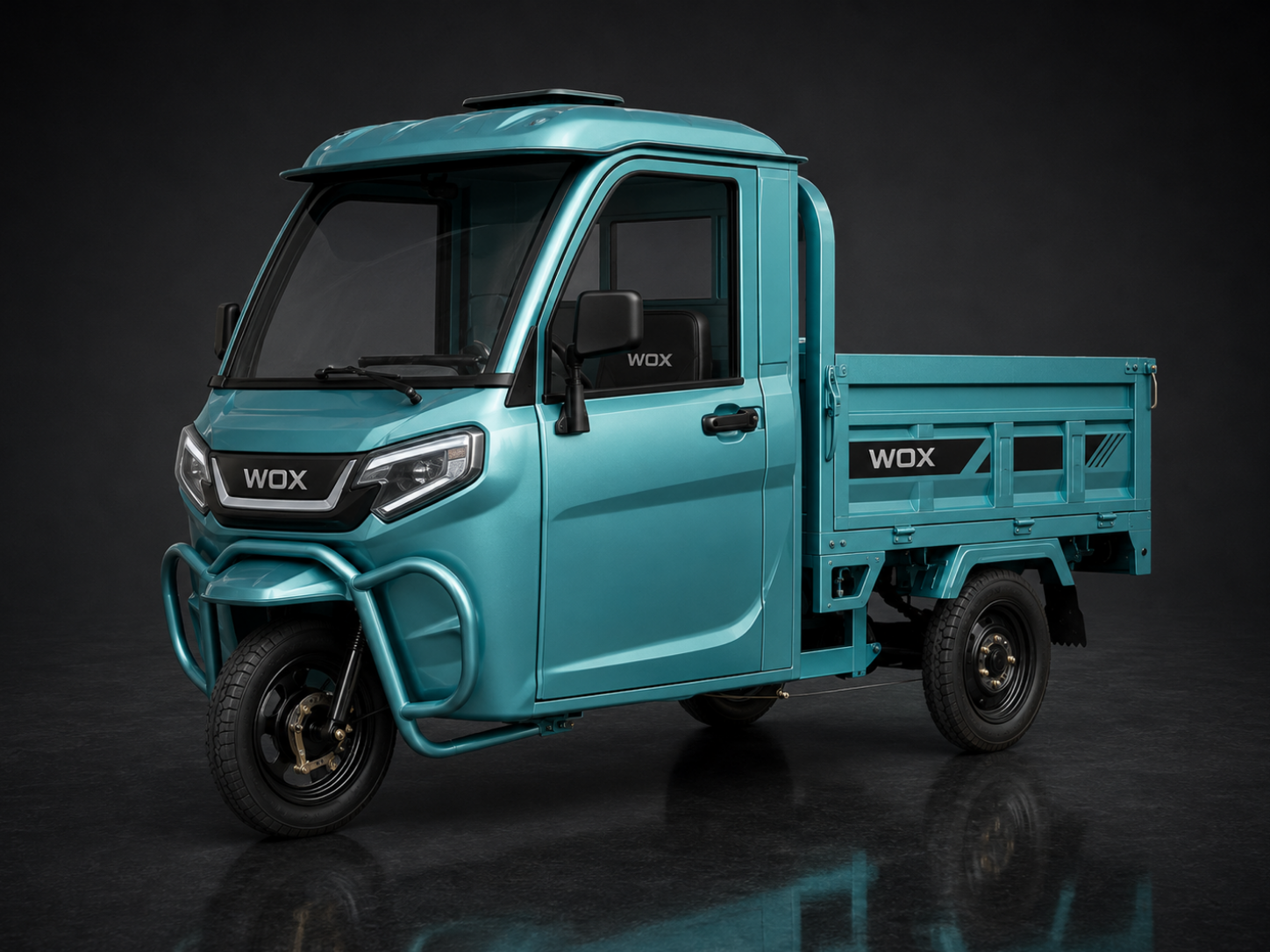
A purpose-built three-wheel cargo platform: WOX Carry
This guide is platform-neutral. The comparison above applies to any three-wheel cargo vehicle versus any delivery scooter. One platform that consistently meets the criteria for commercial urban delivery operations is the WOX Carry.
The WOX Carry is an electric cargo tricycle available in enclosed cabin, open flatbed and canopy cargo bed configurations. Designed for commercial delivery operations where payload, driver safety and all-weather reliability matter.
Evaluate WOX Carry against the criteria in this guide alongside other platforms before making a decision.
Frequently asked questions
Evaluating cargo platforms for your delivery operation?
WOX Motor works with fleet operators, logistics businesses and distributors on commercial vehicle procurement.
Related guides and pages
Join the Ecosystem