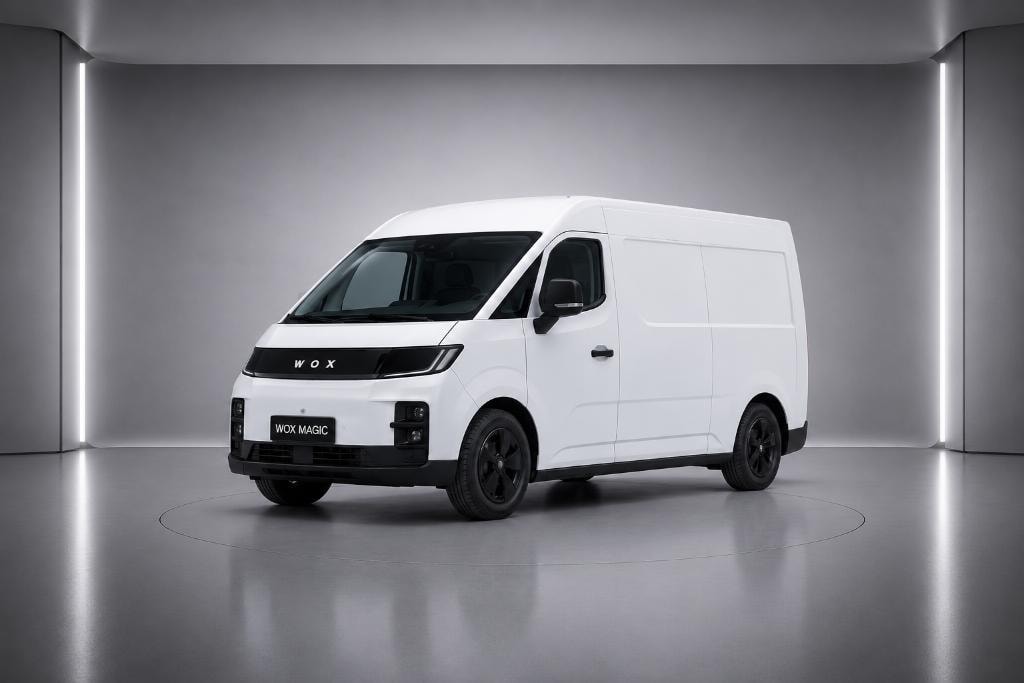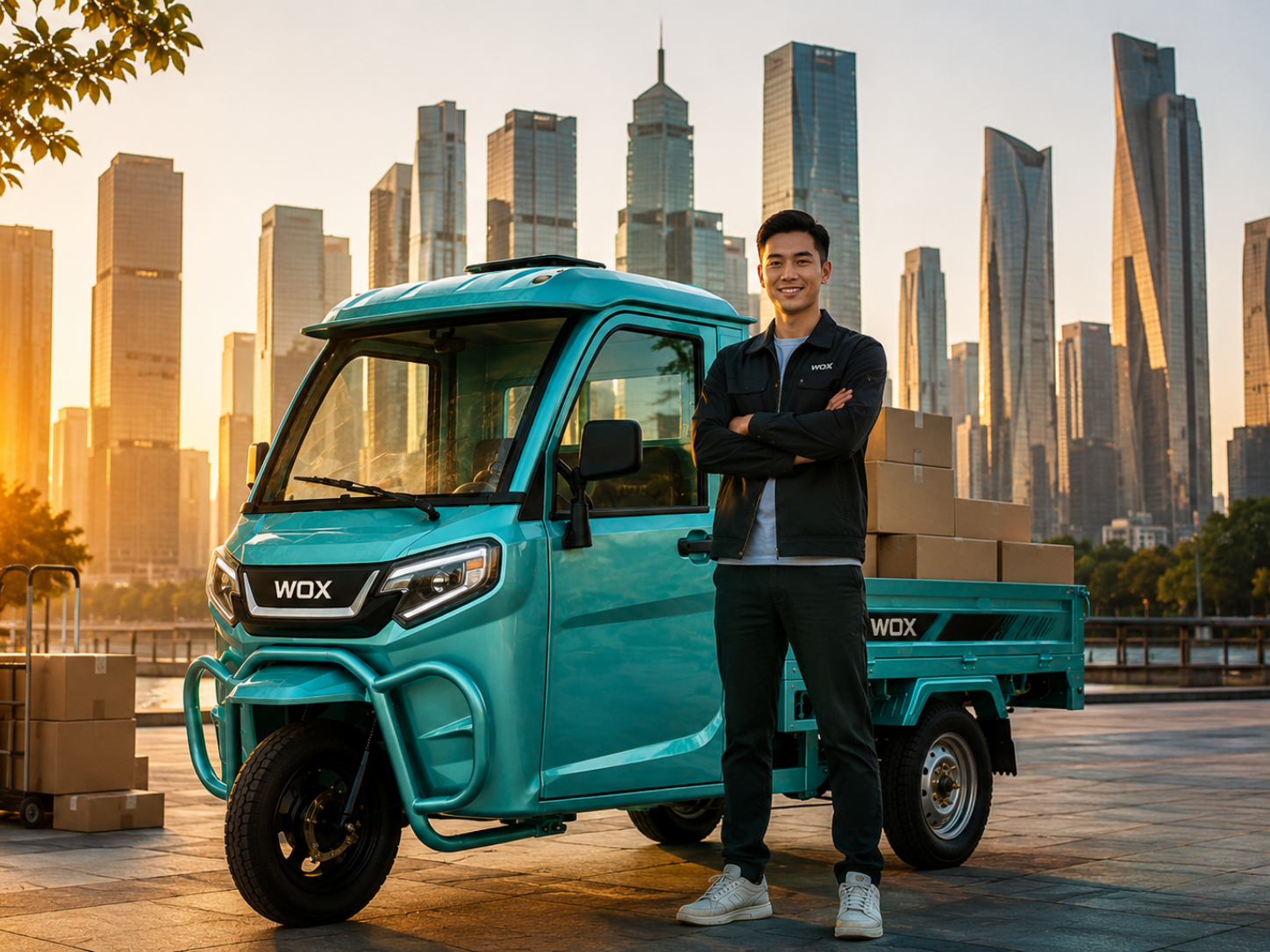
The Future of Urban Delivery Is Smaller, Smarter and Electric
Cities are growing faster than the logistics networks that serve them. Discover why compact electric commercial vehicles are becoming essential infrastructure for the next generation of urban commerce — and how WOX Carry is built for this transition.
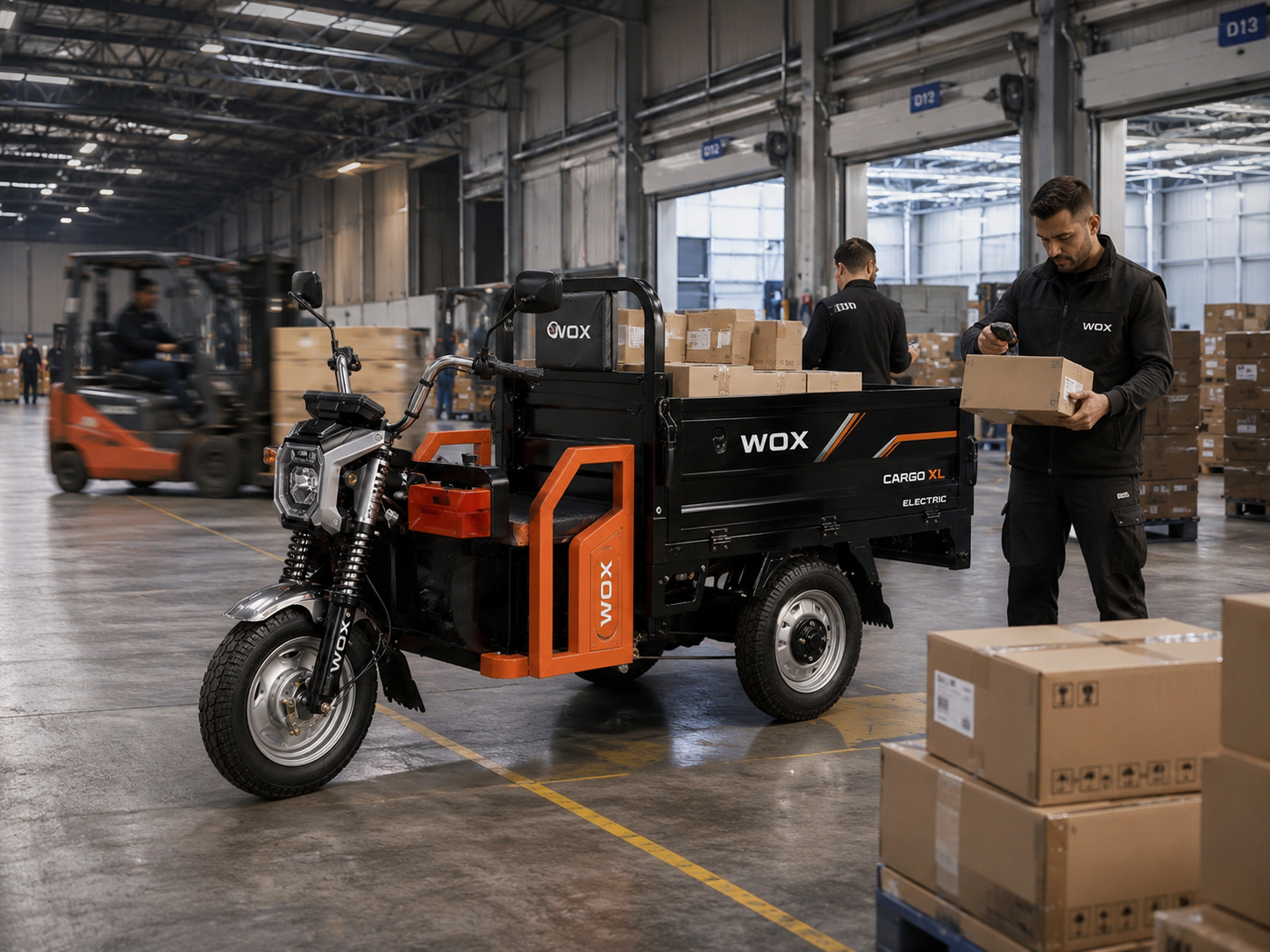
Executive Summary: Urban logistics is undergoing a structural transformation. Rising delivery volumes, tightening emissions regulations and the practical limitations of full-size commercial vehicles are creating strong demand for a new category of compact, electric commercial mobility platforms. This article examines the forces reshaping urban commerce — and why purpose-built solutions like the WOX Carry electric cargo platform are increasingly central to how cities move goods.
Introduction
The way goods move through cities is changing at a pace that most urban planners and logistics operators did not anticipate even five years ago.
E-commerce volumes have grown consistently across every major region. Consumer expectations around delivery speed have shifted from days to hours in many markets. At the same time, cities themselves are becoming denser, more regulated and increasingly hostile to large commercial vehicles operating in residential and pedestrian zones.
The result is a growing mismatch between the logistics infrastructure that exists and the logistics infrastructure that modern urban commerce actually requires.
Full-size delivery vans — the workhorses of twentieth-century distribution — were designed for a different era of commerce. They are efficient on motorways and at scale, but they are increasingly impractical for the narrow streets, restricted zones and short-distance, high-frequency delivery patterns that define urban logistics today.
Something smaller, more agile and more economical is needed. And increasingly, that something is electric.
The Global Logistics Challenge
The scale of the challenge facing urban logistics operators is significant and growing.
According to analysis from the World Economic Forum, urban freight traffic is projected to increase by approximately 78 percent by 2030, driven primarily by the continued expansion of e-commerce and the growth of megacities across Asia, Africa, Latin America and the Middle East. This growth is not evenly distributed — it is concentrated in dense urban environments where road space is already constrained and where the environmental and social costs of additional freight traffic are most acutely felt.
Several pressures are converging simultaneously:
Urban congestion is worsening in virtually every major city. Delivery vehicles that spend significant time idling in traffic are expensive to operate and contribute disproportionately to emissions and noise pollution. Many city authorities are responding with low-emission zones, time-restricted access and outright bans on diesel commercial vehicles in central areas.
Rising delivery demand is placing new pressure on last-mile networks. The final kilometre of a delivery journey — from a local depot or distribution hub to the end customer — is consistently the most expensive and least efficient segment of the supply chain. It is also the segment most sensitive to vehicle size, fuel cost and driver productivity.
Operating costs for traditional commercial vehicles have increased substantially. Fuel prices, maintenance requirements and the growing cost of compliance with emissions regulations are eroding margins for fleet operators and small businesses alike.
Accessibility constraints mean that many of the fastest-growing commercial opportunities — dense residential neighbourhoods, pedestrianised retail zones, university campuses, hotel complexes, industrial parks and resort properties — are either inaccessible to full-size vehicles or require special permits that add cost and complexity.
Environmental pressure from regulators, customers and investors is accelerating the transition away from internal combustion engines in commercial fleets. In many markets, this transition is no longer optional — it is a regulatory requirement with defined timelines.
The Shift Toward Compact Commercial Mobility
The response to these pressures is already visible in the purchasing decisions of fleet operators, municipalities and small businesses across multiple regions.
Compact commercial vehicles — defined broadly as purpose-built platforms with a payload capacity of 250 to 750 kilograms, a footprint small enough for urban navigation and an operating cost structure suited to high-frequency, short-distance operations — are growing faster than any other segment of the commercial vehicle market.
The reasons are straightforward.
A compact commercial EV can access locations that a full-size van cannot. It can operate in low-emission zones without restriction. It costs significantly less per kilometre to run than a diesel equivalent. It requires less parking space, causes less road damage and generates less noise — all factors that matter increasingly to the municipalities and property operators who control access to the most commercially valuable urban locations.
For many businesses, the question is no longer whether to transition to compact electric commercial vehicles. It is which platform to choose and how quickly to scale.
Introducing WOX Carry
The WOX Carry is a compact commercial mobility platform developed specifically for the operational realities of urban logistics, last-mile delivery and small business transport.
It is not a scaled-down version of a full-size van. It is a purpose-built platform designed from the outset for the environments, distances and use cases that define modern urban commerce.
Modular platform architecture is central to the WOX Carry's commercial proposition. The platform supports multiple body configurations — enclosed cargo cabin, open flatbed, canopy-covered cargo bed and passenger variants — allowing operators to configure the vehicle for their specific application rather than adapting a generic product to an unsuitable purpose. A hotel logistics team, a municipal maintenance crew and a food delivery company have fundamentally different requirements. The WOX Carry platform is designed to serve all three.
Electric powertrain options ranging from 500W to 1,200W provide operators with the flexibility to match power output to operational requirements. Electric operation eliminates fuel costs, reduces maintenance requirements compared with internal combustion alternatives and ensures compliance with low-emission zone regulations in markets where such restrictions are already in force or planned.
Compact dimensions allow the WOX Carry to operate in environments where larger vehicles cannot. Narrow delivery lanes, pedestrianised zones, indoor logistics facilities, campus pathways and resort grounds are all accessible to a platform of this size. This is not a marginal advantage — for many operators, it is the difference between being able to serve a location at all and being excluded from it entirely.
Commercial practicality is reflected in the platform's payload capacity, cargo volume and operational range. The WOX Carry is designed to complete a full working day of urban deliveries on a single charge, with charging infrastructure requirements that are compatible with standard commercial premises rather than requiring specialist installation.
Fleet suitability is built into the platform's design. Consistent specifications across the range, straightforward maintenance requirements and the availability of multiple configurations from a single platform simplify fleet management for operators running mixed-use commercial operations.
Typical Applications
The range of commercial applications suited to the WOX Carry platform reflects the breadth of the urban logistics challenge it is designed to address.
Restaurants and food delivery operations benefit from the platform's compact footprint and enclosed cargo configurations, which maintain product temperature and protect deliveries in transit. As food delivery volumes continue to grow across urban markets, the economics of purpose-built electric delivery platforms become increasingly compelling compared with motorcycle-based alternatives.
Retail and e-commerce distribution at the neighbourhood level is one of the fastest-growing segments of urban logistics. The WOX Carry's payload capacity and cargo volume are well matched to the parcel sizes and delivery frequencies typical of this segment.
Hotels and resort properties require internal logistics solutions that are quiet, clean and capable of operating in environments where guest experience is paramount. Electric operation and compact dimensions make the WOX Carry well suited to luggage transfer, housekeeping supply runs and food and beverage distribution across large properties.
Municipalities and public services increasingly require compact, low-emission vehicles for maintenance operations, waste collection support, park management and public space servicing. The WOX Carry's open flatbed and utility configurations address these requirements directly.
Universities and corporate campuses operate as self-contained logistics environments with specific access restrictions and sustainability commitments. Electric commercial platforms that can operate across the full campus footprint — including indoor facilities — are increasingly preferred over diesel alternatives.
Industrial parks and manufacturing facilities require internal logistics solutions for component movement, waste handling and supply distribution. The WOX Carry's payload capacity and configuration flexibility make it suitable for a wide range of light industrial logistics applications.
Courier and last-mile delivery operations are perhaps the most directly served by the WOX Carry platform. The combination of electric operation, compact dimensions and cargo capacity addresses the core operational requirements of urban parcel delivery more directly than either motorcycles or full-size vans.
Emerging Markets: Where the Opportunity Is Largest
While the transition to compact electric commercial vehicles is accelerating across established markets in Europe and East Asia, the largest long-term opportunity lies in the rapidly urbanising economies of Africa, the Middle East, South Asia and Latin America.
These markets share several characteristics that make compact commercial EVs particularly relevant.
Urban populations are growing rapidly, with cities expanding faster than road infrastructure can accommodate. Traffic congestion is severe and worsening. Fuel costs represent a significant proportion of operating expenses for small businesses. And the informal logistics sector — which handles a substantial proportion of urban deliveries in many of these markets — is actively seeking more economical and practical alternatives to ageing motorcycle and three-wheeler fleets.
The WOX Carry is designed with these markets in mind. Its electric powertrain reduces dependence on imported fuel. Its compact dimensions suit the road conditions and urban environments typical of fast-growing cities. Its modular configuration options address the diverse commercial requirements of operators across different sectors and geographies.
WOX Motor is targeting selected markets across these regions for the WOX Carry platform, with distribution partnerships and fleet programmes planned for operators seeking to modernise their commercial vehicle operations.
Leadership Perspective
Mahmut Ulubaş, CEO and Co-Founder of WOX Motor:
"Small businesses and commercial operators in growing cities deserve access to mobility solutions that are practical, affordable and built for the environments they actually work in. The WOX Carry is not about technology for its own sake — it is about giving a restaurant owner, a courier company or a municipal team a better tool for the work they do every day. As cities continue to grow and logistics demands continue to increase, compact electric commercial platforms will become as essential to urban infrastructure as the roads themselves. We have built WOX Carry to be part of that transition from the beginning."
The Road Ahead
The structural forces driving demand for compact electric commercial vehicles are not cyclical. They reflect permanent changes in how cities are organised, how commerce operates and how regulators are choosing to manage urban environments.
E-commerce will continue to grow. Delivery frequency will continue to increase. Low-emission zones will continue to expand. The economics of electric operation will continue to improve as battery costs decline and charging infrastructure becomes more widely available.
Fleet operators and small businesses that begin transitioning to compact electric commercial platforms now will be better positioned to manage these changes than those who delay. The operational advantages — lower running costs, broader access, regulatory compliance — are available today. The competitive disadvantage of remaining with diesel alternatives will grow over time.
The WOX Carry is designed for this transition. It is a commercial mobility platform built not for the logistics environment of the past decade, but for the one that is already taking shape in cities around the world.
Explore WOX Carry
Discover the WOX Carry Platform →
WOX Carry for Last-Mile Delivery →
WOX Carry for Industrial Parks →
Three-Wheel Cargo Vehicle vs Delivery Scooter →
Buyer's Guide: Best Electric Cargo Vehicle for Small Businesses →
Compact Cargo vs Pickup Truck: Full Comparison →
Fleet Solutions and Commercial Enquiries →
Related reading: Why Compact Commercial Vehicles Are Reshaping Urban Logistics · Fleet Electrification and Operating Cost Analysis · Emerging Markets and the Commercial EV Opportunity