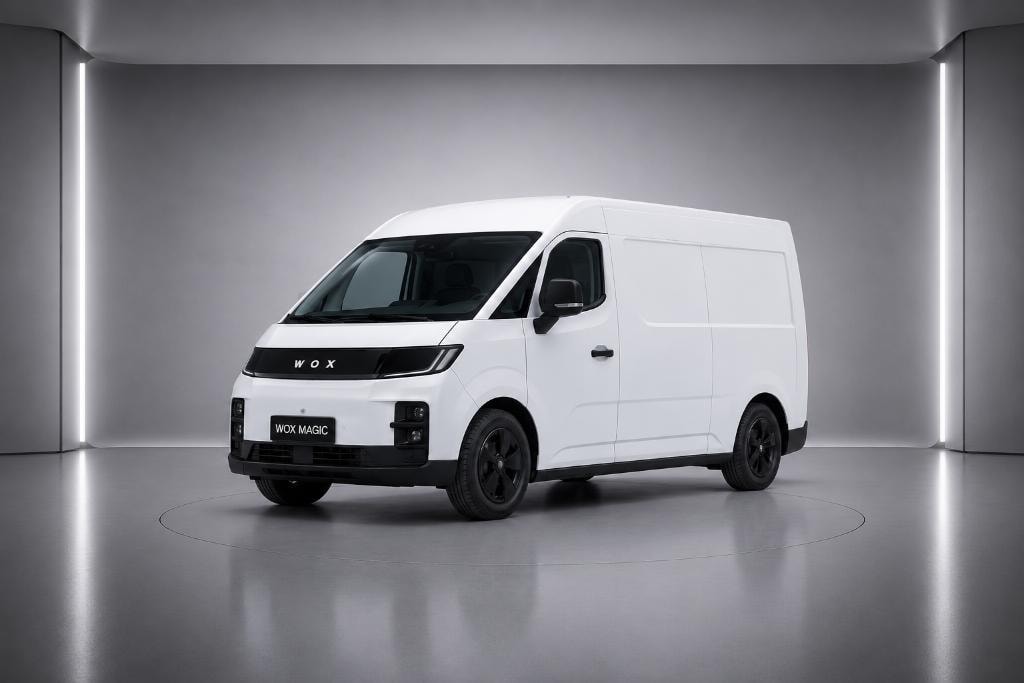
Electric Cargo Vehicles vs Small Delivery Vans: An Objective Comparison
Compact electric cargo vehicles and traditional small vans each have genuine strengths. This objective comparison examines purchase cost, operating economics, maintenance, urban access, payload and fleet scalability — and explains which scenarios favour each platform.
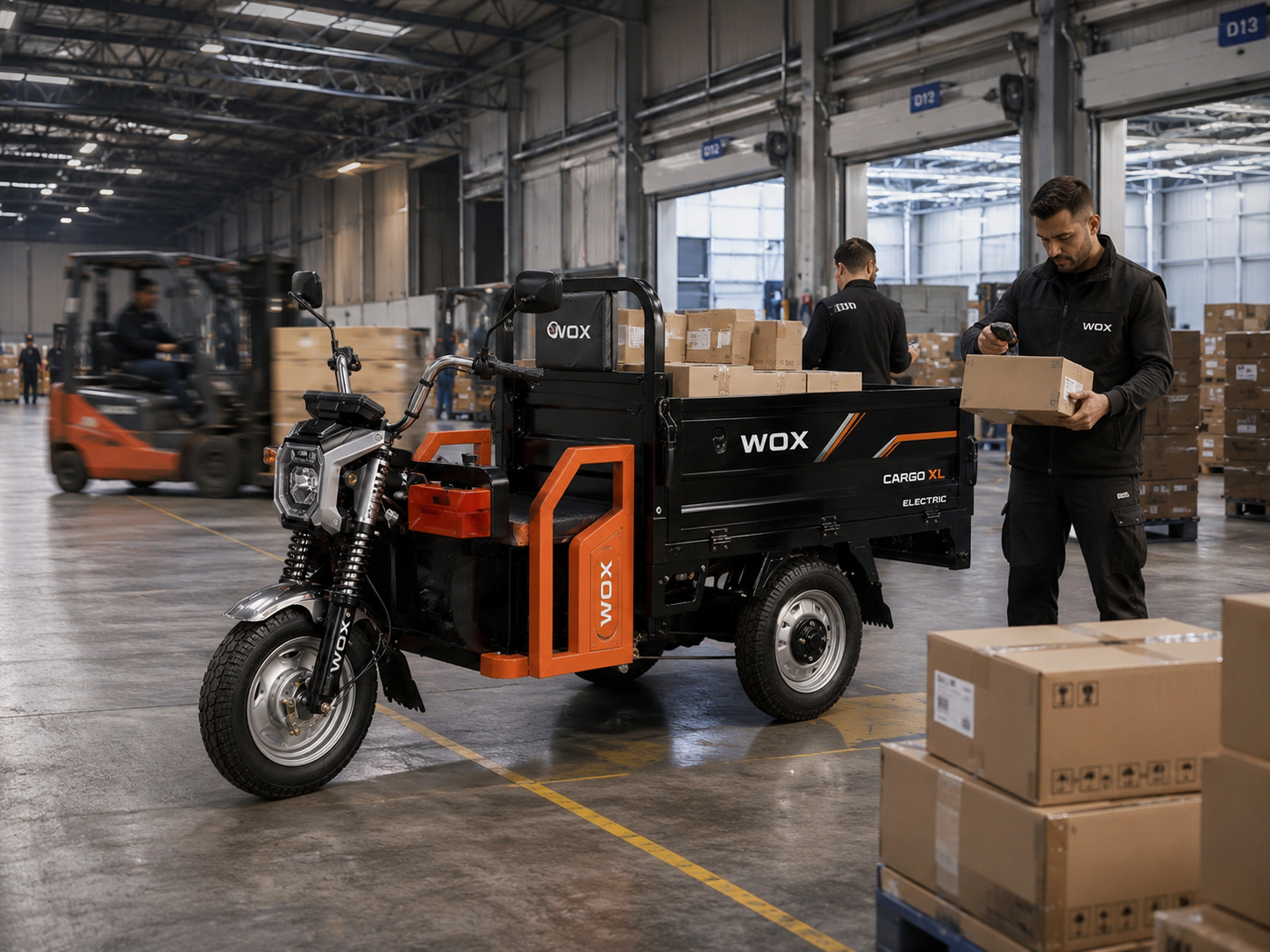
Executive Summary: The choice between a compact electric cargo vehicle and a traditional small van is not straightforward. Each platform has genuine strengths and genuine limitations. This article provides an objective, category-by-category comparison to help fleet operators, small businesses and logistics managers make an informed decision based on their specific operational requirements.
Introduction
The commercial vehicle market is changing. Compact electric cargo platforms — three-wheelers, quadricycles and purpose-built light electric delivery vehicles — are growing in visibility and availability. Traditional small vans, meanwhile, remain deeply embedded in urban and peri-urban logistics operations worldwide.
For fleet operators and business owners evaluating their options, the marketing noise around electric vehicles can make objective comparison difficult. Advocates of electric platforms emphasise running cost savings and environmental credentials. Defenders of conventional vans point to payload capacity, range and infrastructure familiarity.
Both sides have valid arguments. The right answer depends on the specific operation: the routes, the payload, the urban environment, the regulatory context and the budget.
This article examines nine key comparison dimensions — purchase cost, operating cost, maintenance, parking, urban accessibility, delivery efficiency, payload, fleet scalability and environmental impact — and identifies the scenarios in which each platform holds a genuine advantage.
1. Purchase Cost
Small delivery van: A new small diesel or petrol van in the 600–1,000 kg payload class typically costs between USD 15,000 and USD 35,000 depending on specification, market and manufacturer. Used examples are widely available at significantly lower prices, which is a meaningful advantage for small operators with limited capital.
Compact electric cargo vehicle: Purpose-built compact electric cargo platforms — including three-wheelers and light quadricycles — generally carry a lower purchase price than equivalent small vans, often ranging from USD 3,000 to USD 12,000 depending on configuration, powertrain specification and market. The WOX Carry, for example, is positioned as an accessible commercial platform for operators in cost-sensitive markets.
Verdict: Compact electric cargo vehicles typically have a lower entry price than new small vans. However, the used van market provides competitive alternatives for budget-constrained buyers. For new fleet acquisitions, the electric platform often offers a lower per-unit capital cost.
2. Operating Cost
Small delivery van: Diesel and petrol vans carry ongoing fuel costs that are both significant and volatile. In urban stop-start driving, fuel consumption increases substantially compared with motorway operation. A small van covering 100 urban kilometres per day may consume 8–12 litres of diesel, representing a meaningful daily operating expense.
Compact electric cargo vehicle: Electric operation eliminates fuel costs and replaces them with electricity costs, which are typically 60–80 percent lower per kilometre in markets with standard grid electricity pricing. For operators completing 80–150 km of urban delivery routes daily, the cumulative saving over a 3–5 year ownership period can be substantial.
The caveat is charging infrastructure. Operators without access to low-cost overnight charging — either at their premises or through a public network — will see the cost advantage narrow. In markets where electricity costs are high or grid reliability is inconsistent, the economics require careful local assessment.
Verdict: For urban, short-distance operations with reliable charging access, electric cargo vehicles offer meaningfully lower per-kilometre operating costs. The advantage is most pronounced in high-frequency, stop-start urban delivery patterns where diesel consumption is highest.
| Factor | Compact Electric Cargo | Small Diesel Van |
|---|---|---|
| Fuel / energy cost per 100 km | Low | Moderate–High |
| Cost volatility | Low (electricity) | High (fuel price) |
| Urban stop-start efficiency | High | Low |
| Long-distance efficiency | Limited by range | High |
3. Maintenance
Small delivery van: Internal combustion engines require regular oil changes, filter replacements, timing belt service and exhaust system maintenance. In urban stop-start operation, brake wear is accelerated. A well-maintained small van can operate reliably for 200,000–300,000 km, but maintenance costs accumulate over time and unplanned repairs can cause significant downtime.
Compact electric cargo vehicle: Electric drivetrains have fewer moving parts than combustion engines. There is no engine oil, no timing belt, no exhaust system and no gearbox in most configurations. Brake wear is reduced through regenerative braking. Routine maintenance is typically limited to tyre rotation, brake inspection and battery health monitoring.
The primary maintenance consideration for electric platforms is battery degradation over time. Lithium iron phosphate (LFP) batteries — used in many compact commercial EVs — are known for longevity and thermal stability, but capacity will decline gradually over years of use. Battery replacement, if required, represents a significant cost.
Verdict: Electric cargo vehicles generally have lower routine maintenance costs and fewer unplanned repair requirements than diesel vans. Battery longevity is the key long-term variable.
4. Parking
Small delivery van: Standard vans require a full parking bay. In dense urban environments, finding suitable parking near delivery addresses is a persistent operational challenge. Double-parking, loading zone restrictions and parking charges add time and cost to urban delivery operations.
Compact electric cargo vehicle: Smaller footprint platforms can park in spaces inaccessible to full-size vans — motorcycle bays, narrow loading areas, pavement-adjacent spaces and indoor logistics zones. In high-density urban environments, this is a practical operational advantage that directly reduces time per delivery stop.
Verdict: Compact electric cargo vehicles have a clear advantage in dense urban parking environments. For suburban or rural operations where parking is not constrained, the difference is less significant.
5. Urban Accessibility
Small delivery van: Vans are restricted from low-emission zones in a growing number of cities unless they meet current emissions standards. Older diesel vans face surcharges or outright bans. Pedestrianised zones, narrow lanes and indoor logistics facilities are inaccessible. Time-restricted delivery windows add scheduling complexity.
Compact electric cargo vehicle: Electric operation provides unrestricted access to low-emission zones. Compact dimensions allow navigation of narrow streets, pedestrianised areas (where permitted), campus pathways, hotel corridors and indoor warehouse environments. This access advantage is growing in value as urban access restrictions expand.
Verdict: Compact electric cargo vehicles have a structural advantage in regulated urban environments. As low-emission zones expand globally, this advantage will increase.
| Access Scenario | Compact Electric Cargo | Small Diesel Van |
|---|---|---|
| Low-emission zone | Unrestricted | Restricted / surcharge |
| Narrow urban streets | Yes | Limited |
| Pedestrianised zones | Often yes | Rarely |
| Indoor logistics | Yes | No |
| Rural / motorway routes | Limited | Yes |
6. Delivery Efficiency
Small delivery van: Vans can carry more parcels per load, reducing the number of depot return trips required on high-volume routes. For operators with large parcel sizes or high per-stop cargo volumes, the van's cargo capacity translates directly into fewer trips and lower cost per delivery.
Compact electric cargo vehicle: Smaller cargo volume means more frequent depot returns on high-volume routes. However, for operators with smaller parcel sizes — food delivery, pharmacy, small retail, courier parcels — the cargo volume is often sufficient for a full delivery run. The compact platform's ability to park closer to delivery addresses and navigate congestion more efficiently can offset the volume disadvantage through faster stop completion.
Verdict: Vans are more efficient for high-volume, large-parcel routes. Compact electric platforms are more efficient for high-frequency, small-parcel urban delivery where access and parking speed matter more than cargo volume.
7. Payload
Small delivery van: A standard small van in the 3.5-tonne GVW class typically offers a payload of 600–1,000 kg and a cargo volume of 5–8 cubic metres. This capacity is well-matched to a wide range of commercial delivery requirements.
Compact electric cargo vehicle: Payload capacity varies significantly by platform. Three-wheelers and light quadricycles typically offer 250–600 kg payload and 1–3 cubic metres of cargo volume. This is adequate for many last-mile delivery applications but insufficient for operators requiring full van-equivalent capacity.
Verdict: Small vans have a clear payload and cargo volume advantage. For operators whose delivery requirements exceed the compact platform's capacity, the van remains the more practical choice.
| Specification | Compact Electric Cargo | Small Delivery Van |
|---|---|---|
| Typical payload | 250–600 kg | 600–1,000 kg |
| Cargo volume | 1–3 m³ | 5–8 m³ |
| Suitable parcel size | Small–medium | Small–large |
| Multi-drop urban routes | Yes | Yes |
8. Fleet Scalability
Small delivery van: Van fleets are well-understood operationally. Maintenance networks are established, driver training is standardised and vehicle availability is consistent across most markets. Scaling a van fleet is straightforward in markets with mature commercial vehicle infrastructure.
Compact electric cargo vehicle: Scaling an electric cargo fleet requires planning for charging infrastructure — the number of charging points, their capacity and their location relative to the operating depot. For small fleets of 5–20 vehicles, this is manageable. For larger fleets, charging infrastructure investment becomes a significant capital consideration.
The lower per-unit acquisition cost of compact electric platforms does, however, allow operators to deploy more vehicles for the same capital outlay — which can improve delivery density and route coverage in urban areas.
Verdict: Vans scale more easily in markets with limited charging infrastructure. Electric cargo platforms offer lower per-unit capital cost but require charging infrastructure planning as fleet size grows.
9. Environmental Impact
Small delivery van: Diesel and petrol vans produce direct tailpipe emissions of CO₂, NOₓ and particulate matter. In urban environments, these emissions contribute to air quality degradation and are subject to increasing regulatory scrutiny.
Compact electric cargo vehicle: Zero tailpipe emissions during operation. Lifecycle emissions depend on the carbon intensity of the electricity grid used for charging. In markets with a high proportion of renewable energy in the grid mix, lifecycle emissions are substantially lower than diesel equivalents. In markets with coal-heavy grids, the lifecycle advantage is reduced but not eliminated.
Verdict: Electric cargo vehicles have a clear operational emissions advantage. Lifecycle emissions depend on grid carbon intensity but are generally lower than diesel alternatives in most markets.
When Compact Electric Cargo Vehicles Are the Better Choice
Based on the comparison above, compact electric cargo platforms offer a genuine operational advantage in the following scenarios:
- Dense urban delivery routes with many stops, narrow streets and parking constraints
- Low-emission zone compliance where diesel access is restricted or subject to surcharge
- Small-parcel, high-frequency delivery where cargo volume is not the primary constraint
- Campus, resort, hotel and industrial park logistics where access and noise are operational requirements
- Cost-sensitive markets where lower acquisition price and fuel savings are priorities
- Municipal and public service operations with sustainability commitments and urban access requirements
When a Small Van Remains the Better Choice
- High-payload or large-parcel delivery where cargo volume exceeds compact platform capacity
- Long-distance or rural routes where range limitations and charging availability are constraints
- Markets with limited charging infrastructure where overnight charging cannot be reliably arranged
- Operations requiring established maintenance networks in markets where electric platform servicing is not yet widely available
A Practical Example: WOX Carry
The WOX Carry illustrates how a purpose-built compact electric cargo platform addresses the urban delivery use case. Available in multiple body configurations — enclosed cargo cabin, open flatbed, canopy-covered cargo bed and passenger variants — it is designed for operators who need flexibility across different commercial applications within the same fleet.
Its electric powertrain options (500W–1,200W), compact dimensions and modular platform architecture are specifically matched to the urban logistics, last-mile delivery, municipal operations and small business transport scenarios where compact electric platforms hold a genuine operational advantage over full-size vans.
It is not positioned as a van replacement for all use cases. It is positioned as the right tool for the specific operational environments where its characteristics — access, cost, flexibility, compliance — align with what operators actually need.
Conclusion
The choice between a compact electric cargo vehicle and a small delivery van is not a question of which is universally superior. It is a question of which is better suited to a specific operation.
For urban, short-distance, high-frequency delivery in regulated environments, compact electric platforms offer a compelling combination of lower operating cost, better access and regulatory compliance. For higher-payload, longer-distance or rural operations, the small van retains clear practical advantages.
The most effective commercial fleets of the next decade will likely include both — deploying each platform where its characteristics best match the operational requirement.
Frequently Asked Questions
Are electric cargo vehicles cheaper to run than diesel vans? For urban, short-distance routes, electric cargo vehicles typically have significantly lower per-kilometre fuel costs than diesel vans. Total operating cost depends on local electricity prices, charging infrastructure, route distance and duty cycle.
What is the main disadvantage of compact electric cargo vehicles compared to vans? Compact electric cargo vehicles generally offer lower payload capacity and cargo volume than full-size small vans. They are also less suited to long-distance or motorway routes where range limitations and charging availability become constraints.
Can electric cargo vehicles access low-emission zones? Yes. Electric commercial vehicles produce zero tailpipe emissions and can operate in low-emission zones without restriction or surcharge — a significant operational advantage in cities with active access restrictions.
Which is better for last-mile delivery: an electric cargo vehicle or a small van? For high-frequency, short-distance urban delivery with many stops, compact electric cargo vehicles often offer lower cost per delivery, better urban access and easier parking. For routes requiring higher payload or longer distances, a small van may be more practical.
How does fleet scalability compare? Compact electric cargo vehicles can be easier to scale in urban fleets due to lower acquisition cost per unit and simpler maintenance. However, charging infrastructure planning becomes more complex as fleet size grows.
Suggested Graphics
- Comparison table graphic: Side-by-side visual summary of all nine dimensions with colour-coded advantage indicators
- Urban access diagram: Map overlay showing low-emission zone coverage and vehicle access scenarios
- Cost-per-delivery chart: Illustrative bar chart comparing cost per stop across vehicle types for a typical urban route
- Payload range infographic: Visual scale showing payload capacity ranges for each vehicle category
- Use case matrix: Grid showing which vehicle type is recommended for each operational scenario
Related Reading
- Why Last-Mile Delivery Is Changing Worldwide
- The Future of Urban Delivery Is Smaller, Smarter and Electric
- Explore the WOX Carry Commercial Platform
- Interactive Comparison Guide: Electric Cargo vs Small Van
- Electric Cargo vs Diesel Three-Wheeler
- Commercial EV vs Traditional Utility Vehicle
- Compact Cargo vs Pickup Truck
- WOX Carry for Last-Mile Delivery
- WOX Carry for Retail & Small Business
- Fleet Solutions and Commercial Enquiries
- Become a WOX Distributor