
Compact SUV vs Mid-Size SUV: Which One Fits Your Needs?
Compare compact and mid-size SUVs across space, comfort, cost, fuel use, family practicality and urban driving to find the right category.
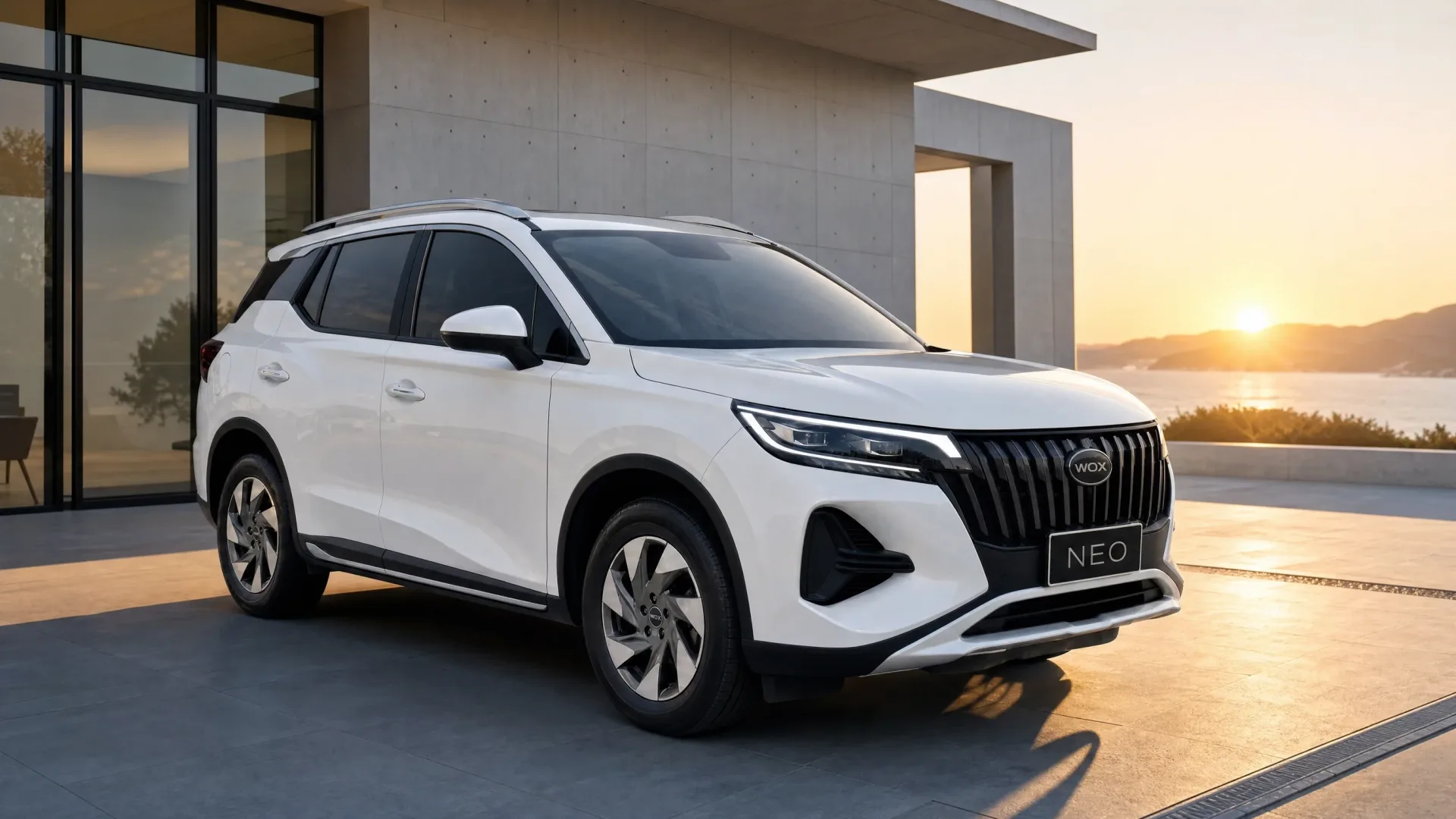
Executive Summary: Choosing between a compact SUV and a mid-size SUV is one of the most common dilemmas for buyers in the market for a family or business vehicle. This article compares both categories across the factors that matter most — space, cost, fuel use, urban practicality and long-distance comfort — to help buyers make a well-informed decision.
Introduction
The SUV market is broadly divided into size categories, and the choice between a compact SUV and a mid-size SUV is one that many buyers find genuinely difficult. Both offer the raised ride height, flexible interior and broad appeal that have made SUVs the dominant vehicle category in most global markets. But they differ meaningfully in dimensions, cost, fuel consumption and the specific use cases they serve best.
This article does not declare one category universally better than the other. The right choice depends on how you will actually use the vehicle, where you will drive it and what your budget allows.
Defining the Categories
Compact SUV (C-SUV):
- Overall length: approximately 4,200–4,700 mm
- Wheelbase: approximately 2,600–2,800 mm
- Seating: five seats standard
- Boot capacity: approximately 400–550 litres standard
- Engine: typically 1.5–2.0 litre turbocharged petrol or diesel
Mid-Size SUV (D-SUV):
- Overall length: approximately 4,600–4,900 mm
- Wheelbase: approximately 2,700–2,900 mm
- Seating: five seats standard; some offer optional seven seats
- Boot capacity: approximately 500–700 litres standard
- Engine: typically 2.0–2.5 litre turbocharged petrol, diesel or hybrid
There is some overlap between the upper end of the compact SUV segment and the lower end of the mid-size segment, which can make direct comparisons complex. The most useful approach is to compare specific models rather than relying on category labels alone.
Exterior Dimensions and Parking
The most immediately practical difference between compact and mid-size SUVs is exterior size.
A compact SUV at 4,400–4,700 mm in length fits comfortably into standard parking spaces in most urban environments. A mid-size SUV at 4,700–4,900 mm is noticeably more challenging to park in tight urban spaces, multi-storey car parks and narrow streets.
For buyers who drive primarily in urban environments — particularly in cities with limited parking — the compact SUV's smaller footprint is a genuine practical advantage. For buyers who drive primarily on open roads and park in large surface car parks, the size difference is less relevant.
Cabin Space
The interior space difference between compact and mid-size SUVs is real but often smaller than buyers expect.
Front cabin: Both categories typically offer similar front cabin space. The difference in wheelbase does not significantly affect front-seat comfort.
Rear cabin: A mid-size SUV's longer wheelbase — typically 100–150 mm more than a compact SUV — translates to meaningfully more rear legroom. For families with tall adult rear passengers who regularly make longer journeys, this difference is noticeable. For families whose rear passengers are primarily children, the difference is less significant.
Headroom: Both categories offer similar headroom in standard configuration. Panoramic sunroofs reduce headroom slightly in both categories.
Seating Capacity
Most compact and mid-size SUVs are five-seat vehicles. Some mid-size SUVs offer an optional third row of seats, providing seven-seat capacity.
However, third-row seats in mid-size SUVs are typically best suited to children rather than adults. The legroom in the third row is limited, and access requires folding the second row. For families who genuinely need seven seats for adult passengers, a purpose-built seven-seat SUV or MPV is a more practical choice than a mid-size SUV with an optional third row.
Cargo Space
| Configuration | Compact SUV | Mid-Size SUV |
|---|---|---|
| Standard boot | 400–550 litres | 500–700 litres |
| Seats folded | 1,200–1,600 litres | 1,500–2,000 litres |
| Loading lip height | Lower | Higher |
| Boot width | Narrower | Wider |
For most everyday family use, a compact SUV's 400–550 litre boot is adequate. The difference becomes more relevant for families who regularly carry large items — bicycles, flat-pack furniture, large pushchairs — or who take extended holidays with significant luggage.
Urban Driving
For urban driving, the compact SUV has a clear practical advantage:
- Manoeuvrability: Shorter overall length and tighter turning circles make compact SUVs easier to navigate in dense traffic
- Parking: Compact SUVs fit into more parking spaces and are easier to park in tight spaces
- Fuel efficiency: Smaller engines and lower vehicle weight typically result in better fuel economy in urban stop-start conditions
- Driver confidence: Many drivers find compact SUVs easier to place accurately in traffic, reducing fatigue
For buyers who spend the majority of their driving time in urban environments, these advantages are significant.
Highway Comfort
For long-distance highway driving, the mid-size SUV has some advantages:
- Stability: Greater vehicle mass and a longer wheelbase typically improve high-speed stability
- Rear passenger comfort: More legroom benefits adult rear passengers on longer journeys
- Noise levels: Larger vehicles often have better acoustic insulation, reducing road and wind noise at highway speeds
- Ride quality: Some mid-size SUVs offer a more composed ride on motorways due to longer suspension travel
However, modern compact SUVs have improved significantly in highway comfort, and the difference is less pronounced than it was a decade ago. Many buyers find compact SUVs entirely adequate for regular long-distance driving.
Fuel Consumption
Mid-size SUVs are generally less fuel-efficient than compact SUVs, for two reasons: they are heavier, and they typically use larger engines.
A compact SUV with a 1.5-litre turbocharged petrol engine typically achieves 6–8 litres per 100 km in mixed driving. A mid-size SUV with a 2.0-litre turbocharged petrol engine typically achieves 8–11 litres per 100 km in comparable conditions.
For buyers who drive high annual mileages, this difference has a meaningful impact on running costs. For lower-mileage buyers, the fuel cost difference is less significant.
Purchase Cost and Maintenance
Mid-size SUVs typically carry a higher purchase price than compact SUVs — often 15–30 percent more for comparable specification levels. This reflects the additional materials, engineering and manufacturing costs involved in producing a larger vehicle.
Maintenance costs are also generally higher for mid-size SUVs: larger tyres are more expensive, larger engines may have higher service costs, and the greater vehicle mass increases brake wear.
For buyers with constrained budgets, the compact SUV's lower purchase price and running costs are a significant advantage.
Family Suitability
Both categories are suitable for families, but with different strengths:
Compact SUV strengths for families:
- Easier to drive and park in urban environments
- Lower purchase price and running costs
- Adequate space for most families of four or five
- Manageable dimensions for less experienced drivers
Mid-size SUV strengths for families:
- More rear legroom for adult passengers
- Larger boot for extended holidays or large items
- Optional seven-seat configuration for larger families
- Greater highway comfort for long-distance family journeys
Business and Fleet Use
For corporate fleets and commercial operators, the compact SUV's lower acquisition cost, better fuel efficiency and easier urban operation typically make it the more practical choice for most duty cycles.
Mid-size SUVs are more appropriate for executive transport, airport transfers with multiple passengers and luggage, and applications where passenger comfort on longer journeys is a primary requirement.
Comparison Summary
| Factor | Compact SUV | Mid-Size SUV |
|---|---|---|
| Urban manoeuvrability | Better | More challenging |
| Parking ease | Easier | More difficult |
| Rear legroom | Adequate | More generous |
| Boot space | 400–550 L | 500–700 L |
| Seven-seat option | Rarely | Some models |
| Fuel efficiency | Better | Lower |
| Purchase cost | Lower | Higher |
| Maintenance cost | Lower | Higher |
| Highway stability | Good | Better |
| Fleet suitability | Strong | Good for executive use |
Who Should Choose a Compact SUV
- Buyers who drive primarily in urban environments
- Families of four or five with children as primary rear passengers
- Buyers for whom fuel efficiency and running costs are important
- Fleet operators seeking a cost-effective, practical vehicle
- Buyers who value ease of parking and urban manoeuvrability
- First-time SUV buyers who want a manageable vehicle
Who Should Choose a Mid-Size SUV
- Families who regularly carry adult rear passengers on longer journeys
- Buyers who need seven seats for occasional use
- Buyers who regularly carry large items or extensive luggage
- Buyers who prioritise highway comfort over urban practicality
- Executive transport applications where passenger comfort is paramount
WOX NEO: A Compact SUV for Everyday Use
One example of a compact SUV developed for everyday family, business and fleet use is the WOX NEO. At 4,660 mm in overall length with a 2,770 mm wheelbase, NEO sits at the larger end of the compact SUV segment, offering a five-seat cabin with 475 litres of boot space — expandable to up to 1,400 litres — and a 1.5T GDI turbocharged petrol engine producing 124 kW and 265 Nm. NEO is developed for selected global markets and is designed for buyers who want compact SUV practicality with a specification level suited to everyday family and commercial use.
Key Takeaways
- Compact SUVs are better suited to urban driving, parking and buyers with cost constraints
- Mid-size SUVs offer more rear legroom, larger boots and better highway comfort
- The fuel efficiency and cost advantage of compact SUVs is meaningful for high-mileage buyers
- Most families of four or five will find a compact SUV adequate for everyday use
- The right choice depends on how and where the vehicle will actually be used, not on size alone
Frequently Asked Questions
What is the difference between a compact and mid-size SUV? A compact SUV is typically 4,200–4,700 mm long with a five-seat cabin and 400–550 litres of boot space. A mid-size SUV is typically 4,600–4,900 mm long with more rear legroom, a larger boot and sometimes an optional third row of seats.
Is a compact SUV large enough for a family? For most families of four or five, yes. A compact SUV with adequate rear legroom and 400–550 litres of boot space handles everyday family requirements comfortably. Families who regularly carry adult rear passengers on long journeys or need seven seats may benefit from a mid-size SUV.
Which SUV is easier to park? Compact SUVs are generally easier to park, particularly in urban environments. Their shorter overall length and tighter turning circles make them more manageable in tight spaces.
Do mid-size SUVs consume more fuel? Generally yes. Mid-size SUVs are heavier and typically use larger engines, resulting in higher fuel consumption — often 2–3 litres per 100 km more than a comparable compact SUV in mixed driving.
Which SUV category is better for fleets? For most fleet applications, compact SUVs offer a better combination of acquisition cost, fuel efficiency and urban practicality. Mid-size SUVs are more appropriate for executive transport and applications where passenger comfort on longer journeys is a primary requirement.
Is a compact SUV suitable for long journeys? Yes. Modern compact SUVs are well-suited to regular long-distance driving. The main limitation compared with mid-size SUVs is rear legroom for adult passengers on extended journeys.
Related Content
- WOX NEO — Compact SUV for Global Markets
- How to Choose the Right Family SUV
- Why Compact SUVs Continue to Dominate Global Markets
- Turbocharged Petrol SUVs Explained
- Explore All WOX Vehicles
- WOX Knowledge Centre


