Why Compact SUVs Continue to Dominate Global Markets
Discover why compact SUVs remain popular worldwide, combining urban usability, family practicality, flexible space and broad market appeal.

Executive Summary: Compact SUVs have become one of the most consistently purchased vehicle categories across both developed and emerging markets. This article examines the practical, economic and social factors that have driven their sustained popularity — and why manufacturers continue to prioritise this segment above almost all others.
Introduction
Walk into any major car showroom in Istanbul, Nairobi, Jakarta or São Paulo and you will find the same pattern: compact SUVs occupy the most prominent floor space, carry the most competitive pricing and attract the longest queues of prospective buyers.
This is not a coincidence. The compact SUV — broadly defined as a five-seat, four-door vehicle with a raised ride height and a body length typically between 4,200 mm and 4,700 mm — has become the default choice for a remarkably wide range of customers. Understanding why requires looking at the practical realities of how people actually use their vehicles every day.
What Is a Compact SUV?
A compact SUV, sometimes referred to as a C-SUV or compact crossover, sits between a subcompact city car and a mid-size SUV in terms of overall dimensions. It typically offers:
- A body length of approximately 4,200–4,700 mm
- A wheelbase of 2,600–2,800 mm
- Five seats across two rows
- A raised ride height compared with a saloon or hatchback
- A boot capacity of 400–550 litres in standard configuration
- Front-wheel drive as standard, with all-wheel drive available on some variants
The category is dominated by models such as the Volkswagen Tiguan, Toyota RAV4, Hyundai Tucson and Kia Sportage in established markets, while a growing number of manufacturers from China, South Korea and other regions are developing competitive alternatives for fast-growing markets.
The Balance Between Size and Practicality
One of the most important reasons for the compact SUV's enduring popularity is the balance it strikes between exterior footprint and interior usability.
A compact SUV is large enough to carry a family of four or five in genuine comfort, with adequate legroom in both rows and a boot that can accommodate pushchairs, luggage or weekly shopping. At the same time, it remains small enough to navigate urban traffic, fit into standard parking spaces and be driven confidently by a wide range of drivers.
This balance is difficult to achieve. Smaller vehicles — city cars and subcompacts — offer urban agility but sacrifice rear-seat space and cargo capacity. Larger vehicles — mid-size and full-size SUVs — provide generous interior room but become cumbersome in dense urban environments and carry a significant fuel and cost penalty.
The compact SUV occupies the practical middle ground that the majority of buyers actually need.
Urban Manoeuvrability
In cities across the world, traffic density, narrow streets and limited parking are daily realities. A compact SUV's dimensions allow it to be driven and parked in conditions where a larger vehicle would be impractical.
The raised seating position — typically 150–200 mm higher than a standard saloon — also improves visibility in traffic, which many drivers find reduces fatigue on urban commutes. This is a consistently cited factor in customer satisfaction surveys across multiple markets.
Family Usability
For families, the compact SUV offers a combination of features that few other vehicle categories can match:
Rear-seat space: A wheelbase of 2,700 mm or more provides genuine legroom for adult rear passengers, not just children.
Child-seat compatibility: Most compact SUVs include ISOFIX anchor points as standard, simplifying the installation of child seats.
Boot capacity: A 400–550 litre boot handles everyday family requirements — school bags, sports equipment, pushchairs — without requiring the family to fold seats for routine journeys.
Panoramic sunroofs and rear air conditioning: Features that were once reserved for premium vehicles are now widely available on compact SUVs, improving comfort for rear passengers on longer journeys.
Entry and exit: The raised floor height makes it easier for children and older passengers to enter and exit the vehicle without the low-slung entry of a saloon or hatchback.
Seating and Cargo Flexibility
Modern compact SUVs typically offer 60/40 split-folding rear seats, allowing owners to extend cargo capacity when needed while retaining one or two rear passenger seats. Some models offer 40/20/40 splits for additional flexibility.
With rear seats folded, many compact SUVs offer 1,200–1,600 litres of cargo space — sufficient for flat-pack furniture, large sports equipment or extended holiday luggage. This versatility means a single vehicle can serve as a daily commuter, a family car and an occasional load carrier without compromise.
Higher Driving Position and Perceived Capability
The elevated driving position of a compact SUV is not merely a comfort feature — it is a significant factor in purchase decisions. Drivers consistently report that a higher seating position improves their sense of control, visibility and confidence, particularly in heavy traffic or unfamiliar road conditions.
While most compact SUVs are front-wheel drive and are not designed for serious off-road use, the raised ride height provides a meaningful advantage on poorly maintained roads, speed bumps, flooded surfaces and unpaved tracks — conditions that are common in many of the world's fastest-growing automotive markets.
Fuel Economy Compared with Larger SUVs
A compact SUV powered by a modern turbocharged petrol engine typically achieves significantly better fuel economy than a mid-size or full-size SUV with a comparable powertrain. Engine downsizing — using a smaller displacement turbocharged unit to deliver the performance of a larger naturally aspirated engine — has been central to improving efficiency in this segment.
A 1.5-litre turbocharged petrol engine in a compact SUV can deliver 120–130 kW of power with a stated fuel consumption of 6–7 litres per 100 km under standard test conditions. This compares favourably with mid-size SUVs, which typically consume 8–10 litres per 100 km with comparable performance.
For fleet operators and private buyers in markets where fuel costs represent a significant proportion of total ownership cost, this difference is material.
Suitability for Private and Fleet Customers
The compact SUV's combination of practicality, running cost and broad appeal makes it suitable for both private buyers and commercial fleet operators.
For private buyers, it serves as a family car, a commuter vehicle and an occasional leisure vehicle in a single package.
For fleet operators — including taxi companies, ride-hailing platforms, corporate fleets, rental companies and government procurement programmes — the compact SUV offers a practical, presentable and cost-effective vehicle that can serve multiple duty cycles.
This dual appeal is unusual. Most vehicle categories serve either private or commercial buyers well, but rarely both. The compact SUV's versatility is a significant competitive advantage.
Regional Differences in Customer Preferences
Customer preferences within the compact SUV category vary significantly by region:
Europe: Buyers tend to prioritise fuel efficiency, safety ratings and technology. Diesel variants remain relevant in some markets, though petrol and hybrid powertrains are increasingly dominant.
Middle East: Buyers prioritise specification levels, comfort features and perceived prestige. Air conditioning performance and interior quality are particularly important.
Africa: Buyers prioritise reliability, parts availability, ground clearance and total cost of ownership. Simplicity of maintenance is a significant factor.
Southeast Asia: Urban manoeuvrability, fuel efficiency and value for money are primary considerations. Compact SUVs compete directly with MPVs in some markets.
South America: Buyers value practicality, durability and accessible pricing. Turbocharged petrol engines are well-established in this region.
Understanding these regional differences is essential for manufacturers developing compact SUVs for global markets.
Why Manufacturers Prioritise Compact SUVs
From a manufacturer's perspective, the compact SUV segment offers several structural advantages:
Volume: The segment generates some of the highest unit volumes in the global automotive market, providing economies of scale that support competitive pricing.
Margin: Compact SUVs typically carry higher margins than equivalent-sized hatchbacks or saloons, reflecting customer willingness to pay for the SUV body style and feature set.
Platform sharing: Many manufacturers build compact SUVs on shared platforms with other models, reducing development and manufacturing costs.
Regulatory compliance: Modern compact SUVs can be engineered to meet Euro 6 and equivalent emission standards while maintaining competitive performance and fuel economy.
Potential Limitations
The compact SUV is not without limitations, and buyers should consider these honestly:
Weight: A compact SUV is typically 200–400 kg heavier than an equivalent hatchback, which affects fuel consumption, tyre wear and braking distances.
Pricing: Compact SUVs carry a price premium over hatchbacks and saloons of comparable size, reflecting the additional engineering and materials involved.
Fuel use: Despite improvements in engine efficiency, a compact SUV will generally consume more fuel than a smaller vehicle with the same powertrain.
Handling: The raised centre of gravity of an SUV means it does not handle as precisely as a lower-slung saloon or hatchback at the limits of grip.
These limitations are well understood by buyers, who consistently indicate that the practical benefits outweigh them for their specific needs.
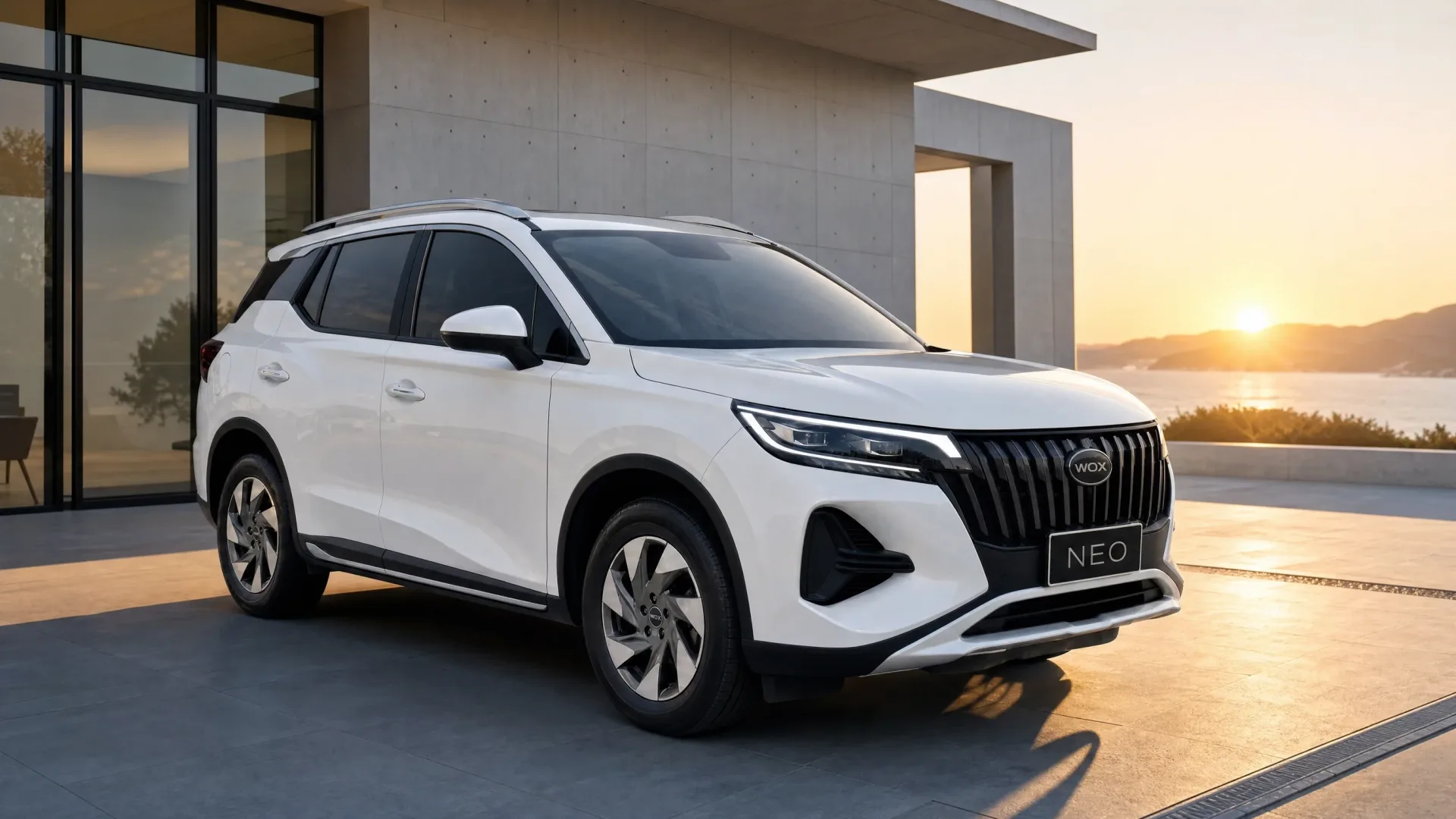
WOX NEO: A Market-Focused Compact SUV
One example of the market-focused compact SUV approach is the WOX NEO, a five-seat turbocharged petrol SUV developed for selected family, business and fleet applications in fast-growing automotive markets. Powered by a 1.5T GDI engine producing 124 kW and 265 Nm, and paired with a seven-speed wet dual-clutch transmission, NEO is designed for the operating conditions and customer expectations of markets in the Middle East, Africa, Central Asia, Southeast Asia and South America.
WOX Motor's approach to the compact SUV segment reflects the broader industry trend: developing vehicles that combine modern design, practical specification and accessible ownership for customers in markets where the compact SUV category is still growing rapidly.
Key Takeaways
- Compact SUVs balance exterior practicality with interior usability in a way that few other vehicle categories achieve
- The raised driving position, flexible cargo space and family-friendly features drive consistent purchase intent across diverse markets
- Fuel economy improvements through engine downsizing have made compact SUVs more competitive on running costs
- The segment serves both private buyers and commercial fleet operators effectively
- Regional preferences vary significantly, requiring manufacturers to adapt their products for local conditions
- Limitations including weight, price and fuel use are real but are consistently outweighed by practical benefits for most buyers
Frequently Asked Questions
What is a compact SUV? A compact SUV is a five-seat, four-door vehicle with a raised ride height and a body length typically between 4,200 mm and 4,700 mm. It sits between a subcompact city car and a mid-size SUV in terms of dimensions and is designed for everyday family and urban use.
Why are compact SUVs so popular? Compact SUVs combine a practical interior with manageable exterior dimensions, a higher driving position, flexible cargo space and broad powertrain options. This combination appeals to a wide range of buyers, from young families to fleet operators.
Are compact SUVs suitable for families? Yes. Most compact SUVs offer five seats, ISOFIX child-seat anchors, 400–550 litres of boot space and rear air conditioning — making them well-suited for everyday family use.
Are compact SUVs easier to drive in cities? Compared with mid-size and full-size SUVs, compact SUVs are generally easier to manoeuvre in urban traffic and fit into standard parking spaces. The raised seating position also improves visibility in heavy traffic.
How do compact SUVs differ from crossovers? The terms are often used interchangeably. Technically, a crossover uses a car-based unibody platform rather than a body-on-frame construction. Most modern compact SUVs are crossovers in this sense, combining SUV styling with car-like driving dynamics and fuel economy.
Are compact SUVs suitable for fleet use? Yes. The compact SUV's combination of practicality, running cost and passenger comfort makes it suitable for taxi fleets, ride-hailing platforms, corporate fleets, rental companies and government procurement programmes.
Related Content
- WOX NEO — Compact SUV for Global Markets
- WOX NEO Production Announcement
- Explore All WOX Vehicles
- WOX Fleet Solutions
- WOX Knowledge Centre
- About WOX Motor