Why Compact Commercial EVs Are Growing Across Emerging Markets
From Lagos to Lahore, Nairobi to São Paulo, compact electric commercial vehicles are gaining ground in some of the world's fastest-growing cities. This analysis examines why emerging markets are becoming the most important growth frontier for commercial EV adoption — and what is driving that shift.

Executive Summary: Emerging markets are not simply following the commercial EV adoption curve established in Europe and East Asia — in many respects, they are developing their own distinct adoption logic. High fuel costs, rapid urban growth, expanding informal logistics networks and the practical limitations of full-size diesel vehicles in dense city environments are creating conditions in which compact electric commercial platforms offer a genuinely compelling value proposition. This article examines the regional dynamics, sector-by-sector drivers and the characteristics that make certain platforms well-suited to these markets.
Introduction
The global conversation about electric vehicle adoption has, until recently, been dominated by the experiences of consumers and fleet operators in Western Europe, North America and China. These markets have shaped the product development priorities of most major manufacturers, the policy frameworks that have accelerated adoption, and the infrastructure investment that has made electric operation practical at scale.
But the next phase of commercial EV growth is increasingly likely to be written in different cities — in Nairobi and Lagos, in Karachi and Dhaka, in Cairo and Riyadh, in São Paulo and Bogotá.
These are not markets where electric vehicles are a premium lifestyle choice or a regulatory compliance exercise. They are markets where the economics of fuel, the realities of urban congestion and the practical requirements of small business logistics are creating genuine demand for a different kind of commercial mobility platform.
Understanding why requires looking at each region on its own terms.
Africa: The Urban Logistics Opportunity
Sub-Saharan Africa is urbanising faster than any other region in the world. The United Nations projects that Africa's urban population will more than double by 2050, with the majority of that growth concentrated in secondary cities rather than established megacities. These are cities where logistics infrastructure is being built from scratch — and where the decisions made now about commercial vehicle fleets will shape urban mobility for decades.
Several factors make compact electric commercial vehicles particularly relevant in this context.
Fuel cost burden. In many African markets, fuel prices represent a disproportionately high share of small business operating costs. A motorcycle or three-wheeler operator in Lagos, Accra or Kampala may spend 30–40 percent of daily revenue on fuel. The shift to electric operation — even with imperfect grid access — can materially change the economics of a small delivery business.
Informal logistics networks. A substantial proportion of urban goods movement in African cities is handled by informal operators: motorcycle couriers, three-wheeler taxis, small cargo vehicles. These operators are price-sensitive, operationally flexible and quick to adopt platforms that offer a clear cost advantage. Compact electric commercial vehicles, priced accessibly and designed for high-frequency urban use, are well-positioned to serve this segment.
Municipal and public sector demand. African municipalities are under increasing pressure to manage urban congestion, reduce air pollution and modernise public service fleets. Compact electric platforms for waste collection support, park maintenance, market operations and public space servicing represent a growing procurement category.
Tourism and hospitality. East and Southern Africa's significant tourism sector creates demand for quiet, clean, compact logistics platforms at safari lodges, beach resorts and heritage properties where noise and emissions are operational concerns.
Middle East: Infrastructure, Tourism and Industrial Demand
The Middle East presents a different but equally compelling commercial EV opportunity. Several Gulf Cooperation Council states have made explicit commitments to reducing hydrocarbon dependence in their domestic economies, and these commitments are translating into procurement preferences across both public and private sectors.
Smart city and infrastructure projects. Large-scale urban development projects across Saudi Arabia, the UAE, Qatar and Kuwait are creating demand for purpose-built logistics platforms suited to controlled environments — construction sites, planned communities, smart city districts and mega-project campuses. Compact electric commercial vehicles are well-matched to these environments, where access control, noise restrictions and sustainability requirements are built into the project specification.
Hospitality and resort operations. The Middle East's rapidly expanding hospitality sector — from luxury desert resorts to urban hotel complexes — requires internal logistics solutions that are quiet, clean and capable of operating in environments where guest experience is paramount. Electric operation and compact dimensions address these requirements directly.
Industrial and logistics parks. The region's growing network of free zones, industrial parks and logistics hubs creates demand for internal transport platforms suited to warehouse environments, loading dock operations and inter-facility goods movement.
Last-mile delivery growth. E-commerce penetration in the Gulf states is among the highest in the world by per-capita transaction value. The expansion of last-mile delivery networks in dense urban environments — where parking restrictions and access controls are increasingly common — is creating demand for compact delivery platforms that can operate efficiently in these conditions.
South Asia: Scale, Density and the Small Business Economy
South Asia — and particularly the Indian subcontinent, Bangladesh, Pakistan and Sri Lanka — represents one of the largest potential markets for compact electric commercial vehicles in the world. The combination of scale, urban density, fuel cost sensitivity and an enormous small business economy creates conditions that are structurally favourable to compact electric platforms.
The three-wheeler legacy. South Asia has one of the world's largest existing fleets of three-wheeled commercial vehicles — auto-rickshaws, cargo tempos and light delivery vehicles. These vehicles are deeply embedded in urban logistics and small business transport. The transition from petrol and CNG three-wheelers to electric equivalents is already underway in India and is accelerating as platform costs decline and charging infrastructure expands.
Small business density. The South Asian small business economy — street food vendors, neighbourhood retailers, pharmacy chains, textile distributors, agricultural produce traders — generates enormous demand for short-distance, high-frequency delivery. Compact electric platforms that reduce fuel costs and maintenance requirements are directly relevant to the economics of these businesses.
Urban congestion and access. Cities like Dhaka, Karachi, Mumbai and Colombo are among the most congested in the world. Compact vehicles that can navigate dense traffic, park in minimal space and access narrow commercial lanes have a practical operational advantage over larger alternatives.
Agricultural and rural-urban supply chains. The movement of agricultural produce from peri-urban growing areas to city markets is a significant logistics challenge across South Asia. Compact electric platforms with flatbed or open cargo configurations are well-suited to this application.
Latin America: E-Commerce, Urban Density and the Green Transition
Latin America's commercial EV opportunity is shaped by a combination of rapid e-commerce growth, high urban density, significant fuel cost volatility and growing regulatory pressure on urban emissions.
E-commerce expansion. Latin America's e-commerce market has grown substantially over the past five years, driven by smartphone penetration, digital payment adoption and the expansion of regional logistics platforms. This growth is generating last-mile delivery demand in cities — São Paulo, Mexico City, Bogotá, Lima, Buenos Aires — where traffic congestion makes compact, agile delivery platforms operationally attractive.
Municipal fleet modernisation. Several Latin American cities have made explicit commitments to electrifying municipal vehicle fleets as part of broader urban sustainability programmes. Compact electric platforms for parks maintenance, waste management support and public space servicing are a growing procurement category.
Tourism and hospitality. Latin America's diverse tourism sector — from beach resorts in Brazil and Mexico to eco-lodges in Costa Rica and Peru — creates demand for quiet, low-impact logistics platforms suited to sensitive natural and heritage environments.
Industrial and agricultural logistics. The region's significant agricultural and agro-industrial sector generates demand for compact commercial platforms suited to farm-to-market supply chains, plantation logistics and food processing facility operations.
Cross-Regional Drivers: What Makes Compact Electric Platforms Relevant
Across all four regions, several common factors are driving interest in compact electric commercial vehicles:
Total cost of ownership. In markets where fuel costs are high relative to local incomes and electricity costs are lower, the operating cost advantage of electric platforms is more pronounced than in established markets. For small business operators, this difference can be the margin between a viable and an unviable operation.
Urban access. As cities in emerging markets grow denser and more congested, the practical advantages of compact platforms — smaller footprint, easier parking, ability to navigate narrow streets — become more operationally significant.
Modular flexibility. Operators in emerging markets often require a single platform to serve multiple applications — cargo delivery in the morning, passenger transport in the afternoon, municipal maintenance at weekends. Platforms with multiple body configuration options address this requirement directly.
Lower acquisition cost. Compact electric commercial platforms are generally less expensive to acquire than full-size vans or trucks, making them accessible to small operators and enabling fleet operators to deploy more vehicles for the same capital outlay.
Reduced maintenance complexity. In markets where specialist diesel engine maintenance is expensive or difficult to access, the simpler drivetrain of an electric platform can reduce both maintenance costs and vehicle downtime.
WOX Carry: Designed for These Markets
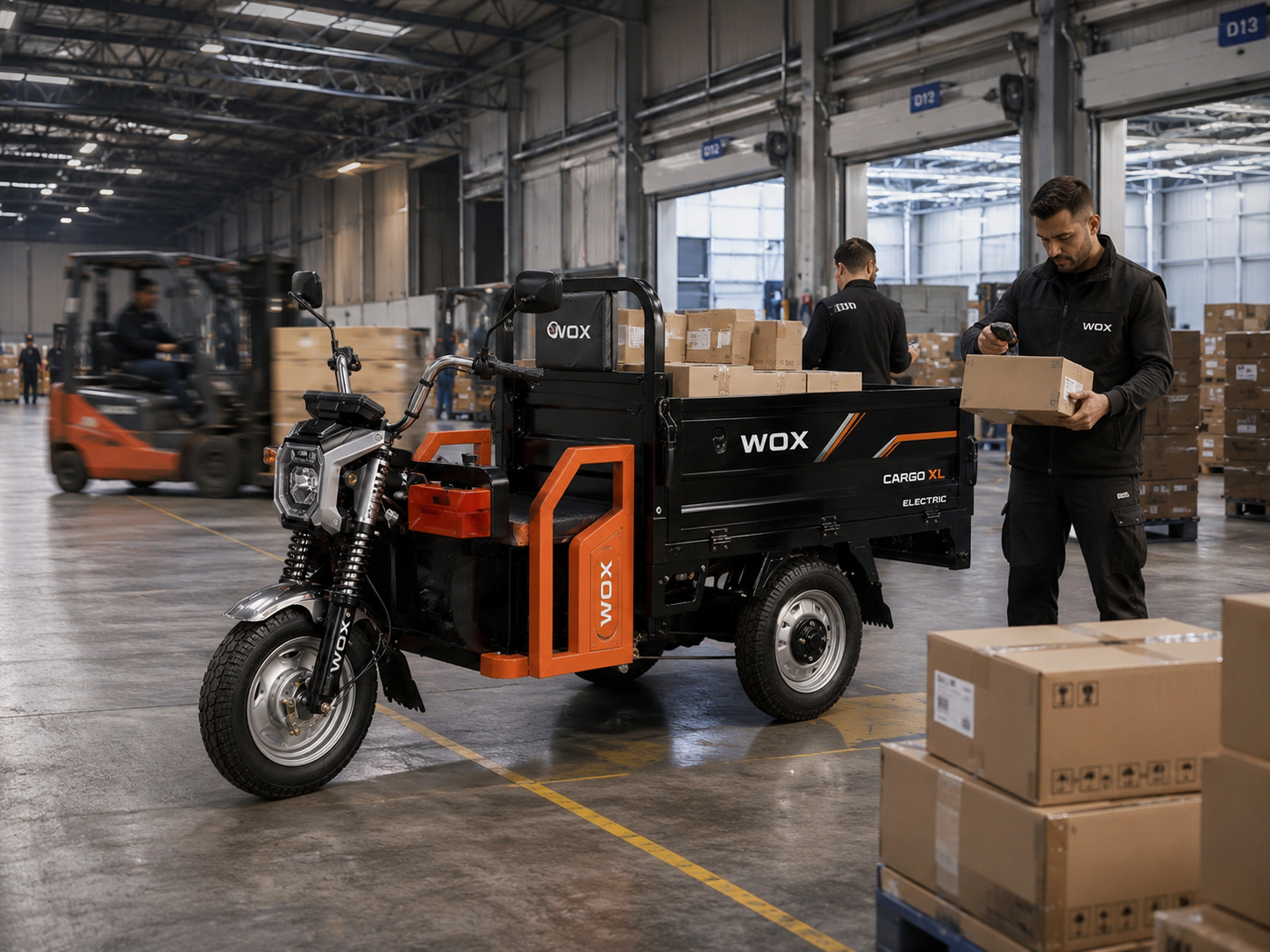
The WOX Carry compact electric cargo platform has been developed with the operational realities of emerging markets explicitly in mind. Its electric powertrain options (500W–1,200W), multiple body configurations — enclosed cargo cabin, open flatbed, canopy-covered cargo bed and passenger variants — and compact dimensions are matched to the urban logistics, small business transport, municipal operations and hospitality sector applications that represent the primary demand segments across Africa, the Middle East, South Asia and Latin America.
It is not positioned as a premium product for established markets. It is positioned as a practical, accessible commercial mobility platform for operators in fast-growing cities who need a vehicle that reduces their operating costs, improves their urban access and can be configured for the specific work they actually do.
WOX Motor is targeting selected markets across these regions for the Carry platform, with distribution partnerships and fleet programmes planned for operators seeking to modernise their commercial vehicle operations.
The Road Ahead
The commercial EV adoption curve in emerging markets will not mirror the trajectory of established markets. It will be faster in some respects — driven by stronger fuel cost economics and less entrenched diesel infrastructure — and slower in others, where charging infrastructure and maintenance networks are still developing.
But the direction is clear. The combination of urbanisation, e-commerce growth, fuel cost pressure and growing regulatory interest in urban emissions is creating structural demand for compact electric commercial platforms across the world's fastest-growing cities.
The operators, distributors and municipalities that begin building experience with these platforms now will be better positioned to scale as the market matures. The window for establishing early operational advantage is open — and in many of these markets, it will not remain open indefinitely.
Frequently Asked Questions
Why are electric commercial vehicles growing in emerging markets? High fuel costs relative to local incomes, rapid urbanisation, growing e-commerce volumes and the practical advantages of compact electric platforms in dense, congested cities are all driving adoption. In many emerging markets, the total cost of ownership for a compact electric commercial vehicle is already competitive with diesel alternatives.
Which emerging markets are seeing the fastest commercial EV growth? Sub-Saharan Africa, South and Southeast Asia, the Middle East and Latin America are all seeing growing interest in compact electric commercial vehicles, driven by urbanisation, rising fuel costs and the expansion of last-mile delivery networks.
Are compact electric commercial vehicles suitable for emerging market road conditions? Purpose-built compact commercial EVs designed for emerging markets typically feature robust suspension, high ground clearance and powertrain configurations suited to mixed road conditions. Suitability varies by specific platform and market.
What types of businesses benefit most from compact commercial EVs in emerging markets? Small businesses, restaurants, retailers, courier companies, municipal service operators, hotel and resort properties, industrial park operators and campus logistics teams are among the most common early adopters.
What are the main barriers to commercial EV adoption in emerging markets? The primary barriers include limited charging infrastructure in some areas, upfront acquisition cost relative to used diesel alternatives, availability of trained maintenance technicians and grid reliability in certain markets. These barriers are reducing as infrastructure investment increases and platform costs decline.
Related Reading
- The Future of Urban Delivery Is Smaller, Smarter and Electric
- Why Last-Mile Delivery Is Changing Worldwide
- Electric Cargo Vehicles vs Small Delivery Vans
- Explore the WOX Carry Commercial Platform
- WOX Carry for Agriculture
- WOX Carry for Municipal Services
- Fleet Solutions and Commercial Enquiries
- Become a WOX Distributor