Why Value-Focused SUVs Are Growing in Emerging Markets
Explore why value-focused SUVs are gaining momentum across emerging markets through practicality, equipment, versatility and ownership support.
Executive Summary: Across fast-growing automotive markets in Africa, the Middle East, Central Asia, Southeast Asia and South America, demand for value-focused SUVs is accelerating. This article examines the economic, social and practical factors driving this trend — and what distinguishes genuine long-term value from low purchase price alone.
Introduction
The phrase "value-focused SUV" is used frequently in automotive marketing, but it is rarely defined with precision. In the context of fast-growing automotive markets, it refers to something specific: a vehicle that delivers a meaningful combination of modern design, practical specification, reliable performance and accessible ownership cost — not simply the cheapest option available.
Understanding why this category is growing requires understanding the markets themselves: who is buying, what they need, and what the consequences of a poor purchase decision look like in markets where aftersales infrastructure may be limited and vehicle replacement cycles are longer than in developed economies.
Urbanisation and the Expanding Middle Class
The most significant driver of SUV demand in emerging markets is urbanisation. According to the United Nations, the proportion of the world's population living in urban areas is projected to reach 68 percent by 2050, with the majority of that growth occurring in Africa, Asia and Latin America.
As populations move to cities, household incomes rise and aspirations shift. The private vehicle — and increasingly the SUV — becomes both a practical necessity and a symbol of economic progress. In many markets, the compact SUV is the first aspirational vehicle purchase for a growing middle-income household.
This is not a niche phenomenon. The International Organisation of Motor Vehicle Manufacturers (OICA) consistently reports that SUV and crossover body styles account for a growing share of new vehicle registrations across emerging markets, a trend that has continued through economic cycles.
Road and Infrastructure Conditions
In many fast-growing markets, road infrastructure varies significantly between urban centres and rural or peri-urban areas. Unpaved roads, speed bumps, flooding and poorly maintained surfaces are common outside major cities.
A compact SUV's raised ride height — typically 180–220 mm of ground clearance — provides a meaningful practical advantage in these conditions compared with a standard saloon or hatchback. Buyers in these markets are not purchasing SUVs for off-road adventure; they are purchasing them because the raised ride height is genuinely useful for the roads they drive every day.
This practical consideration is a primary purchase driver in markets including Sub-Saharan Africa, parts of Southeast Asia and rural areas of Central Asia and South America.
Demand for Multi-Purpose Vehicles
In markets where vehicle ownership rates are lower and household budgets are more constrained, buyers typically need a single vehicle to serve multiple roles: family transport, business use, occasional cargo carrying and long-distance travel.
The compact SUV's combination of five seats, flexible cargo space and practical dimensions makes it one of the few vehicle categories that can genuinely serve all of these roles without significant compromise. This multi-purpose capability is a significant factor in purchase decisions in markets where owning more than one vehicle is not financially realistic for most households.
Purchase-Price Sensitivity and Long-Term Value
In emerging markets, purchase price is a primary consideration — but it is not the only one. Buyers who have researched the market understand that a low purchase price can be offset by high maintenance costs, poor fuel economy, limited parts availability and short vehicle lifespan.
The distinction between low price and long-term value is critical:
| Factor | Low-Price Vehicle | Value-Focused Vehicle |
|---|---|---|
| Purchase price | Lower | Moderate |
| Fuel consumption | Often higher | Optimised |
| Maintenance intervals | Shorter | Longer |
| Parts availability | Variable | Planned for market |
| Resale value | Lower | Better retained |
| Reliability | Variable | Engineered for durability |
| Total cost of ownership | Often higher | Lower over time |
Buyers who have owned vehicles in these markets for multiple cycles increasingly understand this distinction. The demand for value-focused SUVs reflects a maturing buyer base that is looking beyond the sticker price.
Fuel and Servicing Considerations
Fuel costs represent a significant proportion of total vehicle ownership cost in most emerging markets. A compact SUV powered by a modern turbocharged petrol engine — with a stated fuel consumption of 6–7 litres per 100 km — offers a meaningful running-cost advantage over older, larger-displacement naturally aspirated engines that were common in these markets a decade ago.
Servicing intervals and the cost of routine maintenance are equally important. Buyers and fleet operators in markets with limited dealer networks need vehicles that can operate reliably between service visits and that can be maintained by qualified technicians without specialist equipment.
Parts Availability and Distributor Networks
One of the most significant risks for buyers in emerging markets is purchasing a vehicle from a brand with limited local parts availability or a weak distributor network. A vehicle that cannot be repaired promptly — because parts must be imported and take weeks to arrive — has a disproportionate impact on a household or business that depends on it daily.
This is why distributor and service-network strength is increasingly a primary consideration for buyers in these markets, not an afterthought. A vehicle with a slightly higher purchase price but a well-established local parts supply and service network often represents better value than a cheaper alternative with poor local support.
Rental, Taxi and Corporate Fleet Demand
Beyond private buyers, a significant proportion of compact SUV demand in emerging markets comes from commercial operators: taxi companies, ride-hailing platforms, corporate fleets, rental companies and government procurement programmes.
These buyers have different priorities from private customers. They evaluate vehicles on total cost of ownership, vehicle uptime, driver comfort, passenger experience and the availability of fleet pricing and support programmes. They also tend to purchase in volume, which makes their decisions disproportionately important for manufacturers and distributors.
The growth of ride-hailing platforms across Africa, Southeast Asia and South America has been a particularly significant driver of compact SUV fleet demand, as these platforms increasingly specify SUVs for premium service tiers.
The Difference Between Low Price and Long-Term Value
It is worth stating clearly: a value-focused SUV is not the same as a cheap SUV. The distinction matters because buyers who purchase on price alone — without considering total cost of ownership, parts availability, reliability and resale value — often find that the apparent saving at the point of purchase is eroded over the ownership period.
Manufacturers developing vehicles for emerging markets face a genuine challenge: delivering a specification level that meets buyer expectations while maintaining the engineering quality and supply-chain depth that supports long-term reliability. This is harder than it appears, and the market has seen numerous examples of vehicles that were priced attractively but failed to deliver on long-term ownership experience.
What Distributors Should Consider
For distributors evaluating which compact SUV brands to represent in their markets, the following factors are worth assessing carefully:
- Manufacturing quality and quality-control processes
- Parts supply chain depth and local inventory planning
- Warranty terms and claims support
- Training and technical support for local technicians
- Marketing and product support from the manufacturer
- Fleet and volume pricing programmes
- Long-term product roadmap and model continuity
A distributor's reputation in their market is closely tied to the reliability of the vehicles they sell. Selecting a brand with strong manufacturing standards and genuine aftersales commitment is a long-term business decision, not just a product choice.
WOX NEO: Developed for Selected Growth Markets
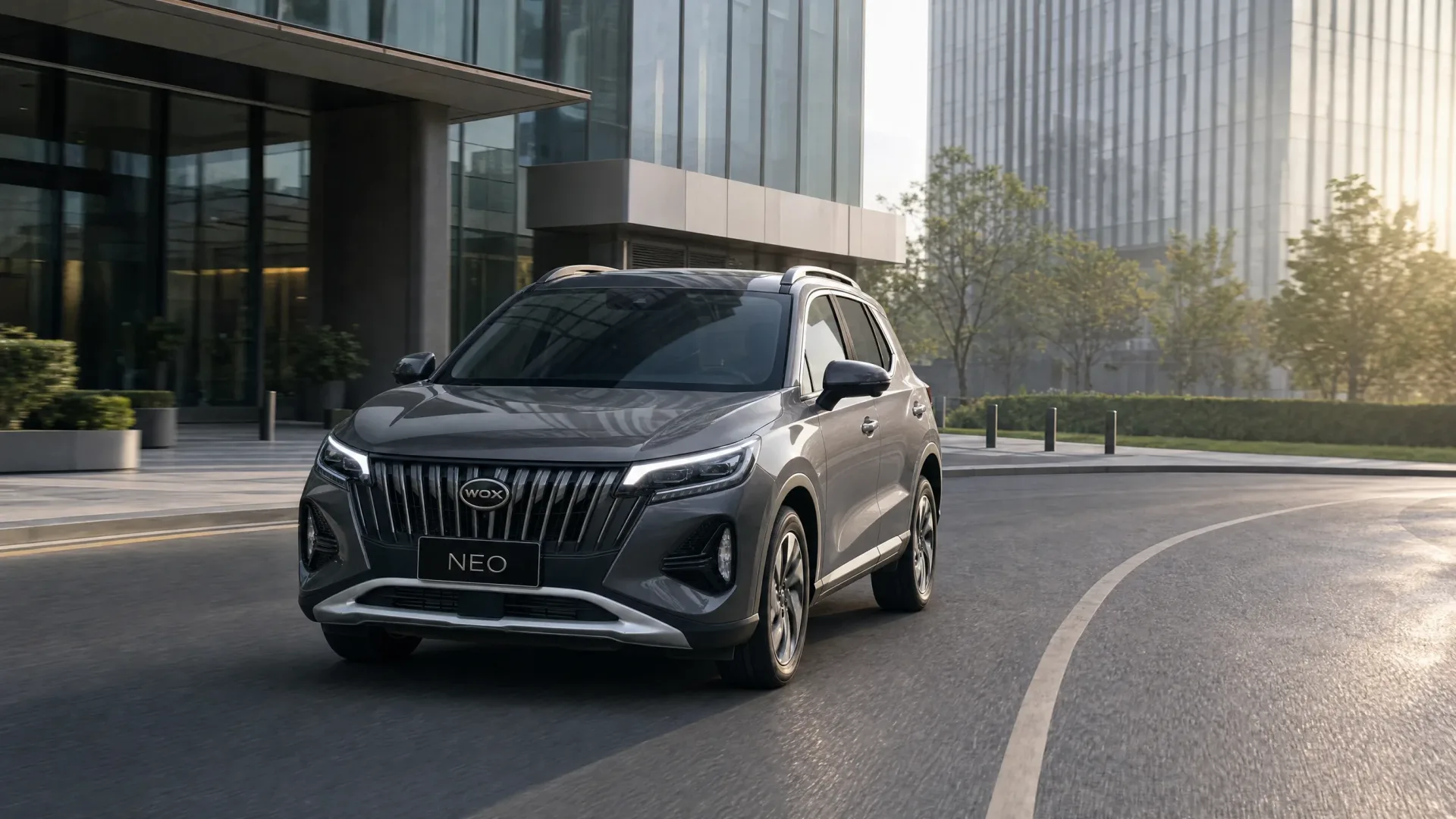
One example of this market-focused approach is the WOX NEO, a five-seat turbocharged petrol compact SUV developed for selected family, business and fleet applications in fast-growing automotive markets. WOX Motor has designed NEO for the operating conditions and customer expectations of markets in the Middle East, Africa, Central Asia, Southeast Asia and South America, with a focus on practical specification, Euro 6 powertrain efficiency and accessible ownership.
WOX Motor is actively building its distribution network in target markets. Organisations interested in distribution opportunities can learn more through the WOX distributor programme.
Key Takeaways
- Urbanisation and expanding middle-income groups are the primary structural drivers of SUV demand in emerging markets
- Road conditions in many markets make the compact SUV's raised ride height a practical necessity, not a lifestyle choice
- The distinction between low purchase price and long-term value is increasingly understood by buyers in these markets
- Parts availability, distributor network strength and servicing support are primary purchase considerations alongside price
- Commercial fleet demand — from taxi companies, ride-hailing platforms and corporate buyers — is a significant and growing segment
- Manufacturers that invest in genuine market adaptation, supply-chain depth and aftersales support are better positioned for long-term success
Frequently Asked Questions
What makes an SUV value-focused? A value-focused SUV delivers a meaningful combination of modern design, practical specification, reliable performance and accessible ownership cost. It is not simply the cheapest option — it is the option that delivers the best total ownership experience relative to its price.
Why are SUVs popular in emerging markets? Compact SUVs offer a raised ride height that is practically useful on variable road conditions, flexible interior space for multi-purpose use, and a combination of family and commercial usability that is difficult to find in other vehicle categories.
Is purchase price the most important factor? Purchase price is a primary consideration, but experienced buyers increasingly evaluate total cost of ownership — including fuel, maintenance, parts and resale value — rather than purchase price alone.
Why does aftersales support matter? In markets where dealer networks may be limited and parts must sometimes be imported, a vehicle that cannot be repaired promptly has a disproportionate impact on households and businesses that depend on it daily. Aftersales support is a critical component of total ownership value.
Are compact SUVs suitable for developing markets? Yes, particularly models engineered for the road conditions, fuel quality and maintenance infrastructure of their target markets. Ground clearance, powertrain durability and parts availability are the most important factors to evaluate.
What should distributors consider when selecting an SUV brand? Manufacturing quality, parts supply chain depth, warranty support, technical training, marketing support and long-term product commitment are all important factors. A distributor's reputation is closely tied to the reliability of the vehicles they represent.
Related Content
- WOX NEO — Compact SUV for Global Markets
- WOX NEO Production Announcement
- Why Compact SUVs Continue to Dominate Global Markets
- Explore All WOX Vehicles
- Become a WOX Distributor
- WOX Knowledge Centre